Hamstring Strain & Hamstring Tear Treatment in Northbrook, IL

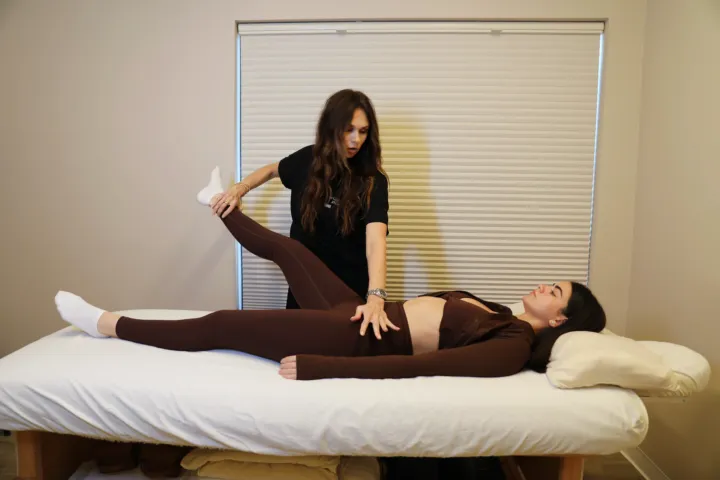
Pulled Your Hamstring? The Pain May Go Away Before the Muscle Is Ready.
Hamstring injuries can happen in a split second—but returning to full strength can take weeks or months. And one of the biggest challenges isn’t the initial injury. It’s preventing the next one.
You accelerate into a sprint, push off to change direction, or reach forward to stretch your leg.
Suddenly, you feel a sharp pain or pulling sensation in the back of your thigh.
Sometimes it’s mild enough to walk off. Other times, you feel a pop and immediately know something is wrong.
Hamstring strains are among the most common muscle injuries in sports, particularly activities involving sprinting, jumping, rapid acceleration, and sudden changes of direction.
But hamstring injuries aren’t limited to professional athletes. They also affect recreational runners, tennis and pickleball players, dancers, and active adults.
At Sports Acupuncturist in Northbrook, Illinois, we use orthopedic assessment, manual muscle testing, motor point acupuncture, dry needling, and traditional acupuncture to help address musculoskeletal pain and selected muscle-function findings.
Our approach focuses on understanding the injury, identifying relevant muscular dysfunction, and supporting recovery alongside appropriate rehabilitation.
Why Hamstring Injuries Can End a Professional Athlete’s Season
Hamstring injuries may seem minor compared with fractures or ligament tears, but they can have serious consequences for athletic performance.
Even professional athletes with access to extensive medical and rehabilitation resources can miss significant portions of a season.
Luka Dončić: A Hamstring Strain Ends His 2026 Regular Season
In April 2026, Los Angeles Lakers star Luka Dončić suffered a Grade 2 left hamstring strain.
The injury was significant enough to rule him out for the remainder of the regular season.
A Grade 2 strain involves partial tearing of muscle fibers and typically requires more recovery time than a mild strain.
The injury illustrates how even a partial muscle tear can interrupt an athlete’s season.
James Harden: The Challenge of Recurrent Hamstring Injuries
During the Brooklyn Nets’ 2020–2021 season, James Harden experienced repeated problems with his right hamstring.
He missed approximately 20 games late in the regular season.
After returning, he reinjured the hamstring less than a minute into Game 1 of the Eastern Conference semifinals against Milwaukee.
His experience highlights an important problem with hamstring injuries:
Feeling ready to return doesn’t always mean the injured muscle has regained the capacity to tolerate high-speed athletic demands.
Cam Thomas: Repeated Hamstring Strains
Brooklyn Nets guard Cam Thomas experienced multiple left hamstring strains during the 2024–2025 NBA season.
After two earlier injuries caused lengthy absences, another hamstring injury in March 2025 meant he was expected to miss the remainder of his season.
His case illustrates the recurring nature of some hamstring injuries and the importance of rehabilitation and return-to-sport planning.
Dak Prescott: When a Hamstring Tear Requires Surgery
Dallas Cowboys quarterback Dak Prescott suffered a significant hamstring injury during the 2024 NFL season.
The injury required surgery and ended his season.
Unlike a mild strain, a severe hamstring tear involving substantial tendon damage may require surgical repair and months of rehabilitation.
Could These Injuries Have Been Prevented?
Not necessarily.
Professional athletes are exposed to extraordinary physical demands, and even well-designed training programs cannot eliminate injury risk.
However, research has identified several strategies associated with reducing hamstring injury risk, including progressive strengthening, eccentric hamstring training, appropriate workload management, and rehabilitation following previous injuries.
The important lesson isn’t that every hamstring injury is preventable. It’s that muscle strength, loading capacity, and recovery deserve attention before an injury occurs—and especially before returning to sport.
What Is a Hamstring Strain?
The hamstrings are a group of three muscles located along the back of the thigh:
- Biceps femoris
- Semitendinosus
- Semimembranosus
These muscles help bend the knee, extend the hip, and control lower-extremity movement.
Most of the hamstring muscle group crosses both the hip and knee joints.
This means the hamstrings must coordinate movement and force production across two joints.
During activities such as sprinting, the hamstrings experience substantial forces while lengthening and contracting.
A hamstring strain occurs when muscle fibers or the musculotendinous tissues are injured by excessive loading or stretching.
The severity can range from microscopic tissue damage to a complete rupture.
What Happens When You Tear Your Hamstring?
A hamstring tear occurs when muscle fibers, the musculotendinous junction, or tendon structures are disrupted.
The severity of the injury determines how much function is affected and what treatment may be required.
Grade 1 Hamstring Strain: Mild Injury
A Grade 1 strain involves relatively minor muscle-fiber damage.
Symptoms may include:
- Mild pain or tightness in the back of the thigh
- Discomfort during running or stretching
- Minimal swelling
- Little or no measurable loss of strength
- Ability to walk normally or with mild discomfort
Many mild strains recover over approximately one to three weeks, although return to sport depends on functional recovery rather than time alone.
Grade 2 Hamstring Strain: Partial Tear
A Grade 2 strain involves more substantial disruption of muscle fibers.
Symptoms may include:
- Sudden sharp pain
- Pain during walking or climbing stairs
- Reduced strength
- Swelling or bruising
- Difficulty running or accelerating
- Pain during resisted knee flexion or hip extension
Recovery often takes several weeks and sometimes longer, depending on the location and extent of the injury.
Returning too early may increase the risk of reinjury.
Grade 3 Hamstring Strain: Complete Tear
A Grade 3 injury involves complete rupture of the affected muscle or tendon structure.
Symptoms may include:
- Sudden severe pain
- A popping or snapping sensation
- Significant weakness
- Bruising and swelling
- Difficulty walking
- In some cases, a palpable defect in the muscle
Some severe injuries involve the hamstring tendon tearing away from its attachment at the pelvis.
This is called a proximal hamstring tendon avulsion.
Complete tears and significant tendon avulsions require prompt orthopedic evaluation.
Depending on the injury pattern, surgical repair may be recommended.
A complete hamstring tear is not simply a more painful version of a muscle strain. It can involve structural damage that requires a different treatment approach.
Why Do Hamstring Strains Happen?
1. High-Speed Running and Sudden Acceleration
Hamstring injuries frequently occur during sprinting.
During the late swing phase of running, the hamstrings help decelerate the lower leg while lengthening under tension.
This places substantial eccentric demands on the muscle.
When the forces exceed the muscle’s capacity, injury may occur.
The biceps femoris long head is particularly susceptible to sprint-related hamstring strains.
2. Previous Hamstring Injury
A previous hamstring strain is one of the most important risk factors for another injury.
Following a strain, an athlete may experience persistent differences in strength, flexibility, or tolerance to high-speed loading.
Pain can improve before full athletic capacity has returned.
This helps explain why rehabilitation must address more than symptom relief.
3. Inadequate Strength at Longer Muscle Lengths
Hamstrings must generate and absorb force while lengthened.
Traditional strengthening exercises may not adequately prepare an athlete for the demands of high-speed running.
Research supports incorporating progressive eccentric strengthening, including exercises performed at longer muscle lengths, into hamstring injury prevention and rehabilitation programs.
4. Training Load and Fatigue
Rapid increases in sprinting volume, intensity, or training frequency can increase physical demands.
Fatigue may also influence force production and movement control.
Appropriate progression and recovery are important components of injury prevention.
5. Hip and Pelvic Muscle Function
The hamstrings work alongside the gluteus maximus during hip extension.
The gluteus medius contributes to pelvic control and lower-extremity function.
Reduced performance of these muscles may be relevant to an individual patient’s movement and strength profile.
However, glute weakness alone is not an established cause of hamstring strains.
At Sports Acupuncturist, we assess selected hip and hamstring muscles to identify potentially relevant functional findings.
Hamstring Strain vs. Hamstring Tendinopathy vs. Sciatica
Not all pain in the back of the thigh comes from a hamstring tear.
Hamstring Strain
A hamstring strain usually develops during a specific activity or movement.
Pain may begin suddenly during sprinting, jumping, or stretching.
Symptoms are commonly reproduced by resisted hamstring contraction or stretching the injured muscle.
Proximal Hamstring Tendinopathy
Proximal hamstring tendinopathy typically develops gradually near the sitting bone.
Symptoms may include:
- Deep buttock pain
- Discomfort during prolonged sitting
- Pain during running
- Symptoms during hip flexion or hamstring loading
Unlike an acute strain, tendinopathy involves changes in tendon structure and loading tolerance rather than a sudden muscle-fiber tear.
Sciatica and Referred Pain
Pain in the back of the thigh can also originate from the lumbar spine or involve neural structures.
Sciatic nerve irritation may cause pain extending into the buttock or leg.
Symptoms may include tingling, numbness, or neurological changes.
Myofascial trigger points in the gluteal or hamstring muscles may also produce referred pain.
Distinguishing between muscle injury, tendon pathology, and referred pain is important because the treatment approaches differ.
Why Stretching an Injured Hamstring Isn’t Always the Answer
When people feel tightness in the back of the thigh, their first instinct is often to stretch.
But a recently strained hamstring is not necessarily a muscle that needs more stretching.
Following an acute injury, the muscle may feel tight because of pain, protective muscle activity, and tissue sensitivity.
Aggressive stretching too early can place additional stress on healing tissue.
Similarly, repeatedly massaging a newly torn muscle does not repair disrupted muscle fibers.
Early management generally focuses on protecting the injured tissue, controlling symptoms, and gradually restoring movement and loading as tolerated.
As healing progresses, rehabilitation introduces increasingly demanding strengthening exercises.
The goal is not simply to make the hamstring feel loose. It’s to restore its ability to tolerate force.
How We Assess Hamstring Pain at Sports Acupuncturist
Our approach combines orthopedic assessment, manual muscle testing, and individualized treatment selection.
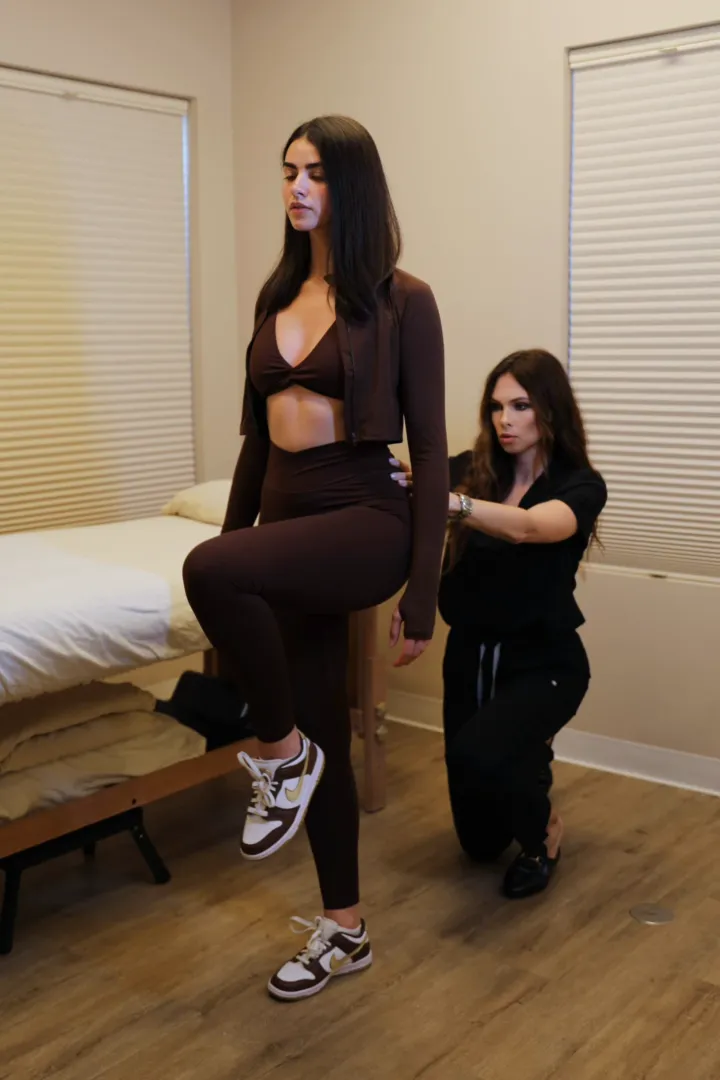
Step 1
Posture and Movement Assessment
We begin by discussing how the injury occurred and evaluating relevant movement and mobility findings.
Depending on the presentation, this may include:
- Hip range of motion
- Knee range of motion
- Pelvic positioning
- Lumbar mobility
- Symptom responses to selected movements
We also discuss whether the injury occurred suddenly or developed gradually.
A sudden pop, significant bruising, or substantial weakness may indicate a more serious injury requiring medical evaluation.
Step 2
Orthopedic Testing
Orthopedic assessment helps identify the likely source of posterior thigh pain.
Depending on the presentation, testing may include:
Hamstring Palpation
Assessing the location of pain and identifying areas of muscular or tendon tenderness.
Resisted Knee Flexion
Evaluating pain and strength during hamstring contraction.
Resisted Hip Extension
Assessing symptoms associated with hip extension.
Hamstring Length Assessment
Evaluating range of motion and symptom reproduction without aggressively stretching an acute injury.
Neurological or Lumbar Assessment
When symptoms suggest referred pain or neural involvement, additional orthopedic or neurological testing may be appropriate.
Trigger Point Assessment
We evaluate relevant muscles for myofascial trigger points that reproduce the patient’s familiar pain.
If findings suggest a significant tear or tendon avulsion, we recommend prompt medical evaluation and imaging when appropriate.
Step 3
Manual Muscle Testing
Manual muscle testing helps assess selected muscles involved in hip and knee function.
Depending on the injury and its stage of recovery, we may evaluate:
- Biceps femoris
- Semitendinosus
- Semimembranosus
- Gluteus maximus
- Gluteus medius
- Other relevant lower-extremity muscles
Testing is modified according to the severity of the injury.
We do not perform forceful testing of a suspected acute tear.
The objective is to identify relevant muscle-performance findings that may help guide treatment.
Step 4
Individualized Needling Treatment
Depending on the examination findings and stage of recovery, treatment may incorporate:
Motor Point Acupuncture: To address selected muscle-performance findings.
Dry Needling: To release identified myofascial trigger points that reproduce familiar pain.
Traditional and Local Acupuncture: To help manage pain and stimulate local physiological responses.
Distal Acupuncture: When appropriate, to complement the treatment approach.
Needling is not used as a substitute for medical assessment of a significant muscle or tendon tear.
Step 5
Reassessment
Following treatment, we may repeat selected muscle tests or joint movements when clinically appropriate.
This allows us to observe short-term changes in pain, movement, or muscle performance.
Reassessment helps guide subsequent treatment decisions.
How Sports Acupuncture May Help Hamstring Pain
Treatment depends on the type of injury, its severity, and the stage of recovery.

Motor Point Acupuncture: Addressing Muscle Function
Motor point acupuncture targets anatomical regions associated with the motor nerve supply to specific muscles.
When testing identifies reduced muscle performance, motor point acupuncture may be incorporated to influence neuromuscular function.
Depending on the findings, treatment may involve selected hamstring or hip muscles.
For example, a patient recovering from a hamstring strain may demonstrate reduced gluteus maximus performance during testing.
Motor point acupuncture may be considered to address this finding, followed by reassessment.
However, immediate changes in manual muscle testing do not demonstrate that torn muscle fibers have healed or that the athlete is ready to return to sport.
Dry Needling: Releasing Trigger Points
Dry needling is used in our practice to target identified myofascial trigger points.
These are hyperirritable areas associated with taut bands of skeletal muscle.
An active trigger point may reproduce pain that the patient recognizes as familiar.
For example, a patient experiencing persistent posterior thigh discomfort may have a trigger point within a hamstring or gluteal muscle that reproduces the symptoms.
When this finding is present, dry needling may be used to help release the trigger point and reduce associated pain.
Not every painful hamstring contains a trigger point, and an acute muscle tear should not automatically be treated with dry needling.
Treatment selection depends on the examination findings and tissue condition.
Traditional and Local Acupuncture: Supporting Pain Relief and Circulation
Traditional acupuncture may be used locally or at distal points to help manage musculoskeletal pain.
Local needle stimulation can influence sensory signaling and microcirculation.
These physiological responses may contribute to pain modulation and changes in the local tissue environment.
Local acupuncture may be considered as an adjunct during recovery when clinically appropriate.
However, increased local circulation does not establish that a torn muscle or tendon will heal faster.
The treatment approach is adapted to the injury’s severity and stage of recovery.
How Long Does a Hamstring Tear Take to Heal?
Recovery depends on the severity, location, and extent of the injury.
Injury Typical recovery considerations
Grade 1: Mild strain Often approximately 1–3 weeks before return to activity, depending on symptoms and function
Grade 2: Partial tear Frequently several weeks; more extensive injuries may take longer
Grade 3: Complete tear May require months of rehabilitation, particularly when tendon repair is necessary
Proximal hamstring tendon avulsion Some injuries require surgery followed by a structured rehabilitation program lasting several months
These are general estimates rather than fixed recovery timelines.
A patient’s ability to walk without pain does not necessarily mean the hamstring is ready for sprinting, jumping, or rapid changes of direction.
Return to sport should be based on clinical recovery, strength, functional testing, and tolerance to progressively demanding activity.
What Does Hamstring Rehabilitation Look Like?
Hamstring rehabilitation generally progresses through several stages.
Phase 1: Protecting the Injury
Immediately following an acute strain, the priority is to avoid further tissue damage.
Management may involve temporary activity modification, compression, and appropriate symptom control.
Gentle movement and low-intensity muscle activation may be introduced when tolerated.
Aggressive stretching and high-load exercise are generally avoided early in recovery.
Phase 2: Restoring Strength and Movement
As symptoms improve, rehabilitation progresses toward strengthening.
Exercises may include:
- Isometric hamstring contractions
- Hamstring bridges
- Progressive knee-flexion exercises
- Hip-extension strengthening
- Controlled eccentric loading
Exercise selection depends on injury severity and tolerance.
Phase 3: Building Strength at Longer Muscle Lengths
As recovery progresses, strengthening increasingly challenges the hamstrings at longer muscle lengths.
Exercises may include:
- Romanian deadlifts
- Nordic hamstring exercises
- Hamstring sliders
- Other progressive eccentric exercises
These exercises help prepare the hamstrings to tolerate higher forces.
Phase 4: Returning to Sport
The final stage involves gradually restoring the physical demands of the patient’s activity.
For athletes, this may include progressive running speed, acceleration, deceleration, jumping, and sport-specific movements.
The objective is to restore performance while reducing the risk of reinjury.
Physical therapists and sports rehabilitation professionals play an important role in guiding these progressions.
Sports acupuncture may be incorporated alongside rehabilitation to address selected pain and muscle-performance findings.
How Can You Reduce Your Risk of a Hamstring Strain?
Although no program can prevent every injury, research supports several strategies for reducing hamstring injury risk.
1. Strengthen Your Hamstrings Eccentrically
Eccentric contractions occur when a muscle produces force while lengthening.
This is particularly relevant during sprinting, when the hamstrings must absorb substantial forces.
The Nordic hamstring exercise is one of the most extensively studied exercises for hamstring injury prevention.
Research has found that prevention programs incorporating Nordic hamstring exercises can substantially reduce hamstring injury rates compared with usual training.
2. Develop Strength at Longer Muscle Lengths
Hamstrings must tolerate force in lengthened positions.
Exercises such as Romanian deadlifts and progressively loaded hamstring sliders can help develop this capacity.
These exercises should be introduced and progressed appropriately.
3. Increase Sprinting and Training Demands Gradually
Sudden increases in running speed, sprinting volume, or training intensity can increase tissue demands.
Progressive exposure allows the body time to adapt.
4. Don’t Ignore Previous Hamstring Injuries
A previous hamstring strain increases the risk of another injury.
Rehabilitation should address strength, loading tolerance, and return-to-sport demands rather than stopping as soon as pain disappears.
5. Evaluate Relevant Muscle-Performance Findings
The hamstrings work alongside the gluteal muscles and other lower-extremity structures.
Assessment may identify reduced performance in selected muscles.
Addressing these findings can be part of an individualized treatment plan, although correcting a manual muscle test finding alone has not been shown to prevent hamstring tears.
Injury prevention is about building capacity—not simply stretching muscles or eliminating tightness.
What Does Research Say About Hamstring Injuries?
Hamstring injury prevention and rehabilitation have been extensively studied in sports medicine.
Eccentric Strengthening and Injury Prevention
A research statement published in the British Journal of Sports Medicine found that prevention programs incorporating Nordic hamstring exercises reduced hamstring injury risk compared with usual care.
This supports the importance of progressive eccentric strengthening.
Rehabilitation and Return to Sport
A review published in the Journal of Athletic Training emphasized progressive loading, eccentric strengthening, and appropriate return-to-sport preparation.
It also highlighted the challenge of recurrent hamstring injuries.
Why Reinjury Matters
Research involving professional football players has demonstrated that hamstring injuries frequently recur.
This reinforces the importance of completing rehabilitation and restoring the physical capacities required for sport.
Where Sports Acupuncture Fits
Acupuncture may be incorporated into a broader musculoskeletal treatment plan to address pain and selected muscular findings.
Motor point acupuncture, dry needling, and traditional acupuncture have different treatment objectives.
At Sports Acupuncturist, we select techniques according to the examination findings and stage of recovery.
For structural muscle tears, progressive rehabilitation remains essential, and severe injuries may require orthopedic management.
What to Expect
01
Assessment
A detailed look at how your body moves, identifying restrictions, imbalances, and overload.
02
Understanding the Cause
We connect your symptoms to how your body is functioning – not just where it hurts.
03
Targeted Treatment
A combination of acupuncture, dry needling, and motor point work based on your needs.
04
Ongoing Progress
Treatment evolves as your body adapts, focusing on long-term results and better movement.
Hamstring Strain Treatment in Northbrook and Chicago’s North Shore

Whether you’re recovering from a pulled hamstring, dealing with recurring posterior thigh pain, or trying to address muscular dysfunction following an injury, understanding the source of your symptoms is an important first step.
At Sports Acupuncturist, we combine orthopedic assessment, manual muscle testing, motor point acupuncture, dry needling, and traditional acupuncture to develop individualized treatment strategies.
Our approach focuses on identifying relevant findings, selecting appropriate techniques, and reassessing the response to treatment.
We work with active adults and athletes from Northbrook, Deerfield, Bannockburn, Highland Park, Glenview, Northfield, and surrounding North Shore communities.
Your hamstring may stop hurting before it’s ready for your sport. Understanding the injury—and restoring the capacity to tolerate activity—matters.
Our Address
Sports Acupuncturist1535 Lake Cook Rd, Suite 405
Northbrook, IL 60062
Hours
By appointment only
Ready to find out what’s contributing to your pain?
Schedule an appointment for an individualized musculoskeletal assessment and treatment plan.
Initial Consultation + Treatment
45-60 minutes
A comprehensive evaluation, movement assessment, and your first treatment.
1535 Lake Cook Rd, Suite 405
Northbrook, IL 60062
By appointment only
Frequently Asked Questions About Hamstring Strains
What is the difference between a pulled hamstring and a torn hamstring?
A pulled hamstring is another term for a hamstring strain.
Strains involve damage to muscle or musculotendinous tissue and can range from minor microscopic injury to complete rupture.
The terms are often used interchangeably, but the severity of tissue damage varies considerably.
Can you walk with a torn hamstring?
Sometimes.
People with mild or moderate hamstring strains may still be able to walk.
However, the ability to walk does not rule out a significant injury.
Severe pain, substantial weakness, bruising, or a popping sensation warrants medical evaluation.
How do I know if my hamstring is torn?
Symptoms may include sudden pain, a popping sensation, swelling, bruising, weakness, and difficulty using the leg.
Physical examination helps assess the injury, but ultrasound or MRI may be needed to determine its extent.
Can a hamstring tear heal without surgery?
Many Grade 1 and Grade 2 hamstring strains heal without surgery when managed with appropriate rehabilitation.
Some complete tears and tendon avulsions may require surgical repair.
Treatment depends on the injury’s location, severity, tendon involvement, and the patient’s activity demands.
How long does a Grade 2 hamstring strain take to heal?
A Grade 2 strain often requires several weeks of recovery.
More extensive injuries may take longer.
Return to sport depends on restoration of strength, movement, and tolerance to activity rather than time alone.
Why do hamstring injuries keep coming back?
Previous hamstring injury is a major risk factor for recurrence.
Potential contributors include incomplete rehabilitation, persistent strength deficits, inadequate tolerance to high-speed running, and returning to sport before the muscle is ready.
Should I stretch a pulled hamstring?
Aggressive stretching immediately after an acute strain may aggravate injured tissue.
Gentle mobility may be introduced as tolerated, followed by progressive strengthening.
The appropriate approach depends on the injury’s severity and stage of recovery.
Can acupuncture help a hamstring strain?
Sports acupuncture may be incorporated into an individualized treatment plan to help manage pain and address selected muscle-performance findings.
Treatment selection depends on the injury’s severity and stage of recovery.
Can dry needling repair a torn hamstring?
Dry needling does not reconnect torn muscle fibers or repair a ruptured tendon.
In our practice, dry needling is used to release identified myofascial trigger points associated with familiar pain.
It may be considered for appropriate muscular findings during recovery, but it is not a substitute for structural healing or rehabilitation.
What is motor point acupuncture for hamstring injuries?
Motor point acupuncture targets anatomical regions associated with a muscle’s motor nerve supply.
It may be used when testing identifies reduced muscle performance in selected hamstring or hip muscles.
Treatment may be followed by reassessment of muscle function.
Can a weak glute cause a hamstring tear?
The gluteus maximus and hamstrings work together during hip extension.
Reduced gluteal performance may influence movement strategies, but glute weakness alone has not been established as a direct cause of hamstring tears.
Muscle testing can help identify relevant findings during an individualized assessment.
When should I see a doctor for a hamstring injury?
Seek prompt medical evaluation if you experience a significant pop, severe pain, extensive bruising, substantial weakness, difficulty bearing weight, or pain high near the sitting bone after a sudden injury.
These findings may indicate a significant tear or tendon avulsion.
Scientific References
- Van Dyk N, et al. Including the Nordic Hamstring Exercise in Injury Prevention Programmes Halves the Rate of Hamstring Injuries: A Systematic Review and Meta-analysis of 8,459 Athletes. British Journal of Sports Medicine. 2019.
- Hickey JT, et al. Hamstring Strain Injury Rehabilitation. Journal of Athletic Training. 2022.
- Hickey JT, et al. Early Introduction of High-intensity Eccentric Loading Into Hamstring Strain Injury Rehabilitation. 2022.
- Effect of Pre-training and Post-training Nordic Exercise on Hamstring Injury Prevention, Recurrence, and Severity in Soccer Players. 2019.

About the Author
Dr. Lijana Shestopal, DTCM, L.Ac.
Dr. Lijana Shestopal is an Illinois-licensed acupuncturist specializing in sports acupuncture, orthopedic conditions, and musculoskeletal pain.
She earned her master’s degree in Acupuncture and Herbal Medicine from the Midwest College of Oriental Medicine and subsequently completed her Doctor of Traditional Chinese Medicine (DTCM) degree at Five Branches University.
She holds national board certification as a Diplomate of Acupuncture and Herbal Medicine (NCBAHM) and has completed extensive advanced training in orthopedic and sports acupuncture, including musculoskeletal assessment, manual muscle testing, motor point acupuncture, and dry needling.
Her clinical approach integrates traditional acupuncture with modern anatomical and orthopedic assessment techniques to address pain, muscle dysfunction, and movement-related conditions.