Lower Back Pain That Keeps Coming Back? We Look Beyond Where It Hurts.

You’ve tried stretching. You’ve had massages. Maybe you’ve even tried physical therapy or chiropractic care.
Your back feels better for a while, but the pain keeps returning.
Why?
Because sometimes the painful area isn’t the only part of the problem.
Your lower back works together with your hips, glutes, pelvis, and surrounding muscles. When certain muscles aren’t performing as expected, other muscles may have to compensate.
At Sports Acupuncturist, we don’t simply place needles where your back hurts.
We evaluate your posture, movement, muscle function, and orthopedic findings to understand what may be contributing to your pain.
Then we use specialized acupuncture techniques to address those findings.
Our approach is simple: identify what isn’t working well, address the muscles contributing to the problem, and reassess how your body responds.
Why Does My Lower Back Pain Keep Coming Back?
One pattern we frequently investigate is the relationship between muscles that are overworking and muscles that aren’t contributing effectively.
Think of your lower back and glutes as a team.
Your gluteus maximus helps generate force during hip extension. Your gluteus medius contributes to pelvic control during walking and other movements.
When these muscles aren’t performing effectively, the body may compensate by changing how it moves or distributes physical demands.
In some patients, the lower back muscles become excessively active or painful during these movements.
This can contribute to the familiar aching or tight sensation that many people experience.
However, not all back pain comes from muscle imbalance. Disc irritation, nerve involvement, joint conditions, and other factors can also contribute.
That’s why we assess before treating.
Why Stretching and Massage Don’t Always Solve Recurring Back Pain
Massage and stretching can be helpful for muscular tension.
But what happens when the tight muscle is only part of the problem?
Imagine one muscle is doing more work than it should because another muscle isn’t contributing effectively.
Relaxing the overworked muscle may provide relief, but it doesn’t necessarily address the other muscle’s performance.
This is why we take a two-part approach when the assessment indicates that both issues are present.
First, we address muscles that demonstrate reduced performance or difficulty contributing to movement.
Second, we address muscles that are excessively tense, tender, or painful.
The goal is to improve how the muscles work together rather than focusing exclusively on tightness.
How We Assess Lower Back Pain
Every treatment begins with an assessment.
1
Posture and Pelvic Assessment
We examine pelvic positioning, postural asymmetries, and movement patterns.
This may include anterior or posterior pelvic positioning and differences between the two sides.
These findings aren’t automatically abnormal or painful, but they can help us identify relevant movement limitations.
2
Orthopedic Testing
We use orthopedic tests to evaluate whether symptoms may involve muscular structures, spinal joints, nerve irritation, or disc-related conditions.
We also consider medical history and MRI findings when available.
These tests help guide our clinical assessment, although imaging or medical evaluation may be necessary to establish a diagnosis.
3
Manual Muscle Testing
We assess muscles that contribute to lower back and pelvic movement, including:
- Gluteus maximus
- Gluteus medius
- Hip flexors
- Lumbar extensors
- Other relevant hip and trunk muscles
We’re looking for differences in strength, pain during testing, and how the muscles perform.
4
Individualized Needling
Once we’ve completed the assessment, we determine which acupuncture techniques may be appropriate.
5
Reassessment
We repeat relevant muscle tests or movements to evaluate how your body responds.
This helps guide subsequent treatment.
Three Different Needling Techniques.
Three Different Purposes.
One of the biggest differences in our approach is that we don’t use every needle for the same purpose.
Although the needles may look identical, the anatomical location and treatment objective can differ.
Motor Point Acupuncture: Addressing Muscle Function
Motor points are anatomical regions associated with a muscle’s motor nerve supply.
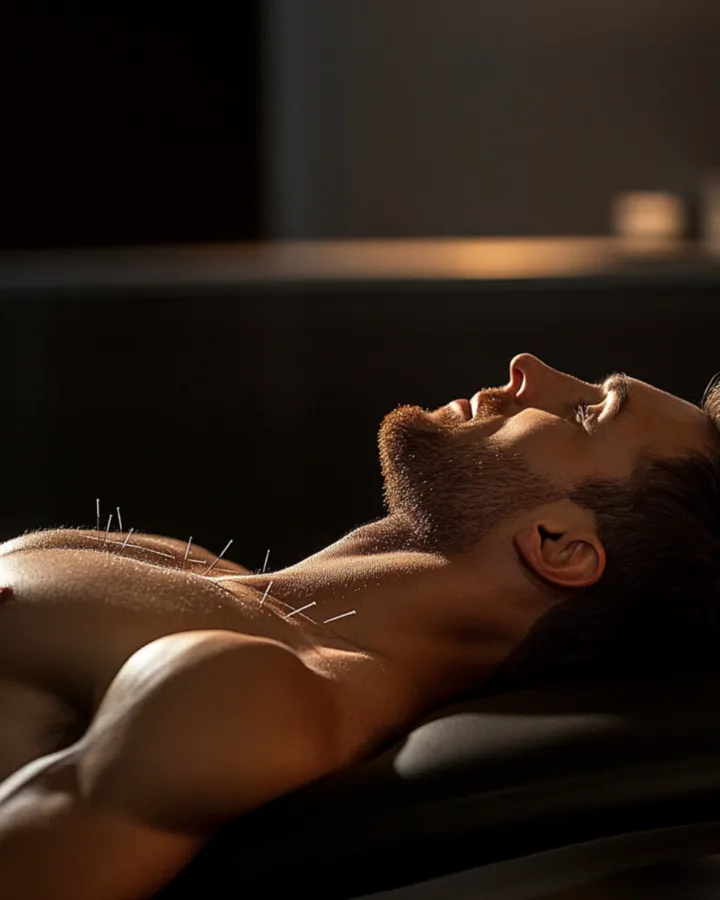
Motor point acupuncture involves placing a fine needle at a selected motor point to stimulate the neuromuscular system.
Why does this matter?
Pain, injury, and changes in movement can affect how muscles perform.
During manual muscle testing, we sometimes identify muscles that demonstrate reduced strength or difficulty contributing to a movement.
Motor point acupuncture is one technique we use when addressing these findings.
We may then repeat the muscle test to see whether its performance has changed.
Some patients demonstrate an immediate improvement during reassessment.
Our objective is to address muscle function, not simply reduce pain at the treatment site.
An immediate improvement doesn’t necessarily mean a muscle was neurologically switched off and then switched back on, but it can provide useful information about the patient’s response to treatment.
Dry Needling: Addressing Trigger Points and Muscular Tension
Dry needling has a different treatment objective.
It targets areas of muscular tenderness and sensitivity, often described as trigger points or knots.
These areas may contribute to pain, restricted movement, or discomfort during activity.
Dry needling may help reduce muscular pain and sensitivity.
However, reducing trigger point discomfort doesn’t necessarily address every strength or movement-related finding identified during an assessment.
That’s why we may combine dry needling with motor point acupuncture when both muscular tenderness and reduced muscle performance are present.
Acupuncture: Addressing Pain Through the Nervous System
Acupuncture can also be used for broader pain management.
Traditional acupuncture often uses points selected according to meridian-based treatment principles.
Some of these points may be located away from the painful area. This is called distal needling.
For example, acupuncture points in the hand or leg may be used during treatment for lower back pain.
How can a needle away from your back affect back pain?
Acupuncture stimulates sensory nerves and can influence how pain signals are processed within the nervous system.
Research has investigated several mechanisms, including endogenous opioid signaling and other pain-modulating pathways.
In other words, acupuncture can engage the body’s own pain-regulating systems.
At Sports Acupuncturist, we may combine distal acupuncture with anatomically targeted motor point acupuncture and dry needling.
Each technique has a different treatment objective.
Does Acupuncture Actually Work for Chronic Lower Back Pain?
Acupuncture is a well-studied, non-drug treatment option for chronic lower back pain.
In fact, the American College of Physicians recommends acupuncture among the initial nonpharmacological treatment options for chronic lower back pain.1
Research has demonstrated that acupuncture can improve pain and physical function, with benefits that may continue well beyond the treatment period.
A large randomized clinical trial published in JAMA Network Open in 2025 followed 800 adults aged 65 and older with chronic lower back pain.2
Researchers found that patients receiving acupuncture alongside usual medical care experienced greater improvements in pain-related disability than those receiving usual care alone. Benefits were still evident at the 12-month follow-up.
These findings support acupuncture as an option for patients seeking non-drug management of chronic lower back pain.
Can Sports Acupuncture Help Sciatica?
Acupuncture can help some patients with sciatica, including patients whose symptoms are associated with lumbar disc herniation.
Sciatica commonly causes pain that travels from the lower back or buttock into the leg.
Symptoms may include:
- Shooting or burning pain
- Tingling or numbness
- Pain extending into the buttock, thigh, or lower leg
- Symptoms aggravated by certain movements or positions
A randomized clinical trial published in JAMA Internal Medicine in 2024 found that acupuncture improved leg pain and physical function in patients with chronic sciatica caused by a herniated disc.3
The benefits remained evident at the 52-week follow-up.
This is important because many patients assume that a herniated disc automatically means acupuncture cannot help.
Although acupuncture doesn’t physically remove a disc herniation, research shows that it can be a useful treatment option for managing associated pain and functional limitations.
When to see a doctor first
Patients experiencing progressive neurological weakness, new bladder or bowel dysfunction, or numbness around the saddle region require urgent medical evaluation.
Why Choose Sports Acupuncture for Lower Back Pain?
Our approach is different from simply treating the area where pain is felt.
We examine the relationship between your back, pelvis, hips, and surrounding muscles.
When the assessment identifies both reduced muscle performance and muscular tension, we can address those findings using different needling techniques.
We also consider whether your symptoms suggest a condition requiring additional medical evaluation or rehabilitation.
The goal is to help you move more comfortably while addressing relevant factors that may be contributing to recurring symptoms.
Sports Acupuncture vs. Physical Therapy or Chiropractic Care
- Physical therapy
Physical therapy commonly emphasizes progressive strengthening, rehabilitation, and movement training. - Chiropractic care
Chiropractic care may include spinal manipulation and other manual therapies. - Sports acupuncture
Sports acupuncture uses needling techniques guided by musculoskeletal assessment.
For some patients, these approaches can complement one another.
For example, acupuncture may help manage pain that makes exercise uncomfortable, while physical therapy addresses progressive strengthening and movement capacity.
The appropriate treatment depends on the individual’s condition and goals.
What to Expect
01
Assessment
A detailed look at how your body moves, identifying restrictions, imbalances, and overload.
02
Understanding the Cause
We connect your symptoms to how your body is functioning – not just where it hurts.
03
Targeted Treatment
A combination of acupuncture, dry needling, and motor point work based on your needs.
04
Ongoing Progress
Treatment evolves as your body adapts, focusing on long-term results and better movement.
Lower Back Pain and Sciatica Treatment on Chicago’s North Shore
Sports Acupuncturist provides assessment-based acupuncture care for patients throughout Chicago’s North Shore, including Northbrook, Bannockburn, Deerfield, Highland Park, Glenview, Northfield, and surrounding communities.
If you’re struggling with recurring lower back pain or sciatica, we can help you explore whether sports acupuncture is an appropriate treatment option.
Our Address
Sports Acupuncturist1535 Lake Cook Rd, Suite 405
Northbrook, IL 60062
Hours
By appointment only
Ready to find out what’s contributing to your pain?
Schedule an appointment for an individualized musculoskeletal assessment and treatment plan.
Initial Consultation + Treatment
45-60 minutes
A comprehensive evaluation, movement assessment, and your first treatment.
1535 Lake Cook Rd, Suite 405
Northbrook, IL 60062
By appointment only
Frequently Asked Questions
Can acupuncture really help chronic lower back pain?
Acupuncture is recommended as an initial non-drug treatment option for chronic lower back pain by the American College of Physicians. Clinical trials have demonstrated improvements in pain and function, including benefits that can persist for months.
Why does my back pain return after stretching or massage?
Stretching and massage may reduce muscular tension, but recurring back pain can involve more than tight muscles. In some patients, reduced muscle performance or compensatory movement patterns may also be relevant. Our approach evaluates both muscle function and muscular tension so treatment isn’t focused exclusively on relaxation.
Can weak glutes contribute to lower back pain?
Yes, reduced gluteal strength or coordination can be a contributing factor for some patients. The glutes help support hip movement and pelvic control. When they aren’t contributing effectively, movement demands may be redistributed to other muscles, including those around the lower back. This is one reason we assess the glutes during our evaluation.
Can sports acupuncture help sciatica caused by a herniated disc?
Yes, acupuncture can help some patients with disc-related sciatica. A 2024 randomized clinical trial found improvements in pain and function that persisted through one year. Treatment suitability depends on the severity of the condition and neurological findings.
What’s the difference between motor point acupuncture and dry needling?
Motor point acupuncture targets selected anatomical regions associated with a muscle’s motor nerve supply and is used in our practice when addressing muscle performance. Dry needling commonly targets trigger points and muscular tenderness. We may combine the techniques when both findings are present.
What makes sports acupuncture different from traditional acupuncture?
Our sports acupuncture approach emphasizes orthopedic testing, manual muscle testing, movement assessment, and anatomically targeted needling. Traditional acupuncture may emphasize meridian-based point selection and broader pain modulation. These approaches can overlap, but our treatment planning is specifically focused on musculoskeletal assessment.
Research References
- Qaseem et al., 2017 — American College of Physicians Clinical Practice Guideline. Noninvasive Treatments for Acute, Subacute, and Chronic Low Back Pain. Annals of Internal Medicine. Recommends acupuncture among initial non-drug options for chronic lower back pain.
- DeBar et al., 2025 — JAMA Network Open. Acupuncture for Chronic Low Back Pain in Older Adults: A Randomized Clinical Trial. Demonstrated improvements in pain-related disability at six and twelve months.
- Tu et al., 2024 — JAMA Internal Medicine. Acupuncture vs Sham Acupuncture for Chronic Sciatica From Herniated Disk: A Randomized Clinical Trial. Found improvements in leg pain and function that persisted through 52 weeks.

About the Practitioner
Dr. Lijana Shestopal, DTCM, L.Ac.
Dr. Lijana Shestopal is an Illinois-licensed acupuncturist specializing in sports acupuncture, orthopedic conditions, and musculoskeletal pain.
She earned her Master’s degree in Acupuncture and Herbal Medicine from the Midwest College of Oriental Medicine and subsequently completed her Doctor of Traditional Chinese Medicine (DTCM) degree at Five Branches University.
In addition to her formal education, Dr. Shestopal has completed extensive advanced training in orthopedic and sports acupuncture, with a particular focus on musculoskeletal assessment, manual muscle testing, motor point acupuncture, and dry needling.
She holds national board certification as a Diplomate of Acupuncture and Herbal Medicine through the National Certification Board for Acupuncture and Herbal Medicine (NCBAHM).
Her clinical approach combines traditional acupuncture with modern anatomical and orthopedic assessment techniques to address pain, muscle dysfunction, and movement-related conditions.
At Sports Acupuncturist, she focuses on identifying potential contributors to musculoskeletal pain rather than treating symptoms in isolation, using individualized treatment strategies to help patients improve function and return to their activities.
Articles on this topic
Treatment Methods11 min read
Movement Health · Sciatica & Hip Function
Pain in your glute or shooting down your leg?

Sports Injuries3 min read
Why Back Pain Keeps Coming Back in Active People — and What’s Usually Missed
Struggling with back pain despite treatment? Discover the surprising causes of recurring back pain and regain your comfort.
Treatment Methods8 min read
What’s Really Causing Lower Back Pain
Learn how to address low back pain effectively. Find insights into its causes and the best methods to achieve relief.