Plantar Fasciitis & Heel Pain Treatment in Northbrook, IL


Does your heel hurt when you take your first steps in the morning? Does the pain improve as you start walking, only to return after prolonged standing, running or exercise?
Plantar fasciitis is one of the most common causes of heel pain, affecting runners, athletes and individuals who spend considerable time on their feet. While the pain is typically felt at the bottom of the heel, contributing factors may extend well beyond the foot itself.
Pelvic alignment, postural imbalances, altered muscle activation, restricted ankle mobility and compensatory movement patterns may all influence the mechanical forces placed on the plantar fascia.
At Sports Acupuncturist in Northbrook, IL, we combine orthopedic assessment, postural analysis, functional movement evaluation, manual muscle testing, motor point acupuncture and dry needling to address heel pain and identify potential contributing musculoskeletal dysfunction.
What Is Plantar Fasciitis?

The plantar fascia is a thick band of connective tissue that extends from the calcaneus (heel bone) toward the base of the toes. It supports the medial longitudinal arch of the foot, assists in shock absorption and contributes to efficient force transmission during walking and running.
When the plantar fascia is repeatedly exposed to loads that exceed its capacity to recover, it may become painful and develop structural changes.
Although the term plantar fasciitis suggests inflammation, chronic cases frequently involve degenerative changes rather than inflammation alone. This is why the condition is also referred to as plantar fasciopathy.
Understanding these mechanisms is important because successful management may require more than temporarily reducing pain or inflammation. Identifying what is repeatedly placing excessive stress on the plantar fascia is an important part of treatment.
Common Symptoms of Plantar Fasciitis
Symptoms may include:
- Sharp or stabbing pain at the bottom of the heel.
- Heel pain during the first steps in the morning.
- Pain when standing after prolonged sitting.
- Tenderness along the inner underside of the heel.
- Pain after running, jumping or prolonged walking.
- Heel pain that improves with movement but returns after activity.
- Tightness through the arch of the foot or calf.
- Difficulty walking barefoot on hard surfaces.
- Recurring heel pain despite regular stretching or massage.
Symptoms can develop gradually and may affect one or both feet.
Why Does My Heel Hurt When I Wake Up in the Morning?
First-step heel pain is one of the hallmark symptoms of plantar fasciitis.
During sleep or prolonged rest, the plantar fascia and surrounding musculotendinous structures are relatively unloaded. When you stand and take your first steps, these tissues are suddenly exposed to body weight and tensile forces.
In a sensitized plantar fascia, this transition from rest to loading can produce significant pain.
As movement continues, the discomfort may temporarily decrease. However, this does not necessarily mean the underlying tissue has recovered or that the mechanical factors contributing to the condition have been resolved.
What Causes Plantar Fasciitis?
Plantar fasciitis is often associated with a combination of repetitive mechanical stress, reduced tissue capacity, postural imbalances, altered muscle function and changes in lower-extremity mechanics.
Although the pain occurs in the foot, understanding how the entire body distributes mechanical forces may help identify contributing factors.
Postural Imbalances and Pelvic Alignment
The position of the pelvis can influence how the spine, hips, knees, ankles and feet function together.
The plantar fascia is functionally connected to structures along the posterior kinetic chain, including the Achilles tendon, calf muscles, hamstrings and lumbopelvic musculature. This interconnected system is sometimes referred to as the superficial back line.
Changes in pelvic positioning may influence muscle length, tension, weight distribution and movement mechanics throughout this chain.
Two patients with nearly identical heel pain may therefore require very different treatment approaches depending on their postural presentation.
Anterior Pelvic Tilt and Plantar Fasciitis
Anterior pelvic tilt occurs when the pelvis rotates forward.
This position may place certain posterior-chain muscles, particularly the hamstrings, in a relatively lengthened position. Depending on compensatory knee and ankle positioning, it may also contribute to increased tension throughout the posterior kinetic chain.
In this postural pattern, muscles may feel tight not because they are shortened, but because they are already lengthened, overloaded or working excessively to maintain stability.
Repeatedly stretching tissues that are already under excessive tension may provide temporary relief without addressing the underlying dysfunction. In some cases, additional stretching may aggravate symptoms.
These patients may benefit more from improving muscle activation, lumbopelvic stability, postural control and mechanical load distribution than from focusing exclusively on flexibility.
Posterior Pelvic Tilt and Plantar Fasciitis
Posterior pelvic tilt occurs when the pelvis rotates backward.
In this postural pattern, certain posterior-chain muscles may be held in a relatively shortened position. Depending on the accompanying lower-extremity mechanics, genuine muscular shortening and mobility restrictions may also be present.
When assessment confirms these restrictions, targeted stretching, dry needling and mobility interventions may be appropriate.
The important distinction is that pelvic positioning provides valuable clinical information, but the actual length and function of individual muscles must still be assessed.
| Postural or muscular presentation | Potential treatment focus |
|---|---|
| Anterior pelvic tilt with excessive posterior-chain tension | Muscle activation, stability and postural control |
| Posterior pelvic tilt with muscular shortening | Targeted stretching and mobility |
| Lengthened muscles under excessive tension | Improved muscle function and load distribution |
| Shortened, mobility-restricting muscles | Reducing tension and restoring mobility |
| Compensatory muscular overactivity | Identifying and addressing underperforming muscles |
Are Tight Calf Muscles Really the Problem?
One of the most common recommendations for plantar fasciitis is to stretch the calf muscles. However, not all muscular tightness is caused by shortened muscles.
A muscle may feel tight because it is:
- Structurally shortened.
- Held in a lengthened position under excessive tension.
- Working excessively to compensate for another muscle.
- Fatigued or overloaded.
- Protectively contracting in response to pain or instability.
The gastrocnemius and soleus muscles contribute to ankle movement, shock absorption and propulsion. Reduced calf extensibility may restrict ankle dorsiflexion and potentially increase stress on the plantar fascia.
However, a sensation of calf tightness does not automatically indicate that more stretching is needed.
By assessing pelvic alignment, knee positioning, ankle mobility and muscle function, we can better determine whether the calf muscles require relaxation, stretching, activation or improved support from surrounding musculature.
Weakness of the Intrinsic Foot Muscles
The small muscles located within the foot contribute to arch support, balance and dynamic foot stability.
Reduced strength or endurance in these muscles may increase reliance on passive structures, including the plantar fascia, during weight-bearing activities.
When the muscular structures responsible for supporting the foot are not functioning optimally, the plantar fascia may be exposed to greater mechanical demands.
Assessing the function of these muscles can help determine whether treatment should focus exclusively on pain relief or also address muscular support and stability.
Altered Foot and Ankle Mechanics
Mechanical factors that may contribute to plantar fascia overload include:
- Restricted ankle dorsiflexion.
- Excessive or prolonged foot pronation.
- Reduced dynamic arch control.
- Altered push-off mechanics.
- Limited mobility of the great toe.
- High or low foot arches combined with poor load tolerance.
- Reduced ankle stability.
- Compensatory weight distribution.
Foot posture alone does not necessarily cause plantar fasciitis. How the foot functions under load is often more clinically relevant than its static appearance.
Hip and Gluteal Muscle Dysfunction
The foot does not function independently of the rest of the body.
The gluteus medius, gluteus maximus and other hip stabilizers contribute to pelvic stability, lower-extremity alignment and force distribution during walking and running.
Altered hip muscle function may influence femoral rotation, knee alignment and foot mechanics.
For example, reduced gluteus medius function may contribute to altered pelvic stability and lower-extremity control during single-leg weight-bearing activities.
In some patients, evaluating and addressing these muscles may help identify movement patterns that contribute to repetitive loading of the foot.
Sudden Increases in Physical Activity
Plantar fasciitis commonly develops following changes in activity, including:
- Increasing running mileage too quickly.
- Beginning a new exercise program.
- Increasing jumping or high-impact activities.
- Spending more time standing or walking.
- Changing footwear or running surfaces.
- Returning to exercise after prolonged inactivity.
When physical demand increases faster than the tissue’s ability to adapt, symptoms may develop.
Why Stretching Alone May Not Resolve Plantar Fasciitis
Two patients experiencing nearly identical heel pain may have entirely different underlying biomechanical presentations.
One may have genuinely shortened calf muscles and restricted ankle mobility. Another may have excessive posterior-chain tension associated with postural compensations, despite already having adequate muscle length.
The first patient may benefit from targeted stretching, while the second may require improved muscle activation, stability and postural control.
This is why a standardized stretching program may help one person but produce little improvement—or even aggravate symptoms—in another.
At Sports Acupuncturist, we evaluate the individual rather than treating the diagnosis alone. Determining whether a muscle is shortened, lengthened, underperforming or compensating helps guide a more individualized treatment strategy.
Not All Heel Pain Is Plantar Fasciitis
Although plantar fasciitis is a common cause of heel pain, several other conditions can produce similar symptoms.
Identifying the likely source of pain is important because different conditions require different management strategies.
| Condition | Typical distinguishing symptoms |
|---|---|
| Plantar fasciitis | Pain under the inner heel, particularly during the first steps after rest. |
| Heel fat pad syndrome | Deep, bruise-like pain in the center of the heel, often worse on hard surfaces. |
| Achilles tendinopathy | Pain at the back of the heel or along the Achilles tendon. |
| Calcaneal stress fracture | Progressive heel pain with weight-bearing, sometimes accompanied by swelling and pain when the heel is compressed. |
| Tarsal tunnel syndrome | Burning, tingling, numbness or radiating pain into the foot. |
| Baxter’s nerve entrapment | Deep or burning pain along the inner heel that may worsen with prolonged activity. |
| Heel spur | A bony growth that may be present with or without heel pain. |
Severe or rapidly worsening pain, inability to bear weight, significant swelling, neurological symptoms or pain following trauma may require further medical evaluation or diagnostic imaging.
Does a Heel Spur Cause Plantar Fasciitis?
A heel spur is a bony projection that develops along the calcaneus.
Heel spurs are frequently identified in individuals with plantar fasciitis, but they are also found in people who experience no heel pain.
The presence of a heel spur on an X-ray does not necessarily mean it is the source of the patient’s symptoms.
Treatment should therefore consider the clinical presentation, tissue sensitivity, muscle function and contributing mechanical factors rather than focusing on the presence of a heel spur alone.
How We Assess Plantar Fasciitis and Heel Pain
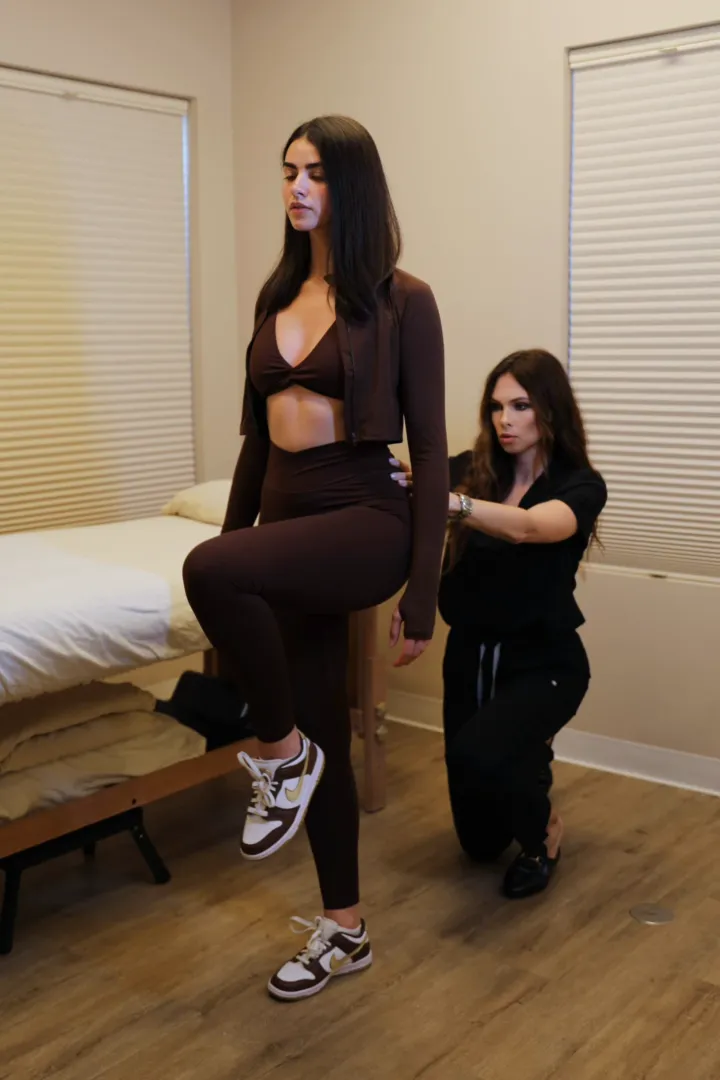
At Sports Acupuncturist in Northbrook, treatment begins with an individualized musculoskeletal assessment rather than assuming that every case of heel pain has the same cause.
Our assessment considers the entire kinetic chain, from pelvic positioning to the muscles responsible for supporting the arch of the foot.
1
Postural Assessment
We evaluate structural and postural factors that may influence lower-extremity mechanics, including:
- Anterior pelvic tilt.
- Posterior pelvic tilt.
- Pelvic asymmetry or an elevated ilium.
- Femoral rotation.
- Knee alignment and positioning.
- Foot pronation and supination.
- Medial longitudinal arch positioning.
- Posterior-chain muscle length and tension.
Understanding these relationships helps determine whether the painful structures may be exposed to excessive mechanical stress as a result of dysfunction elsewhere.
2
Orthopedic Assessment
Depending on the patient’s presentation, orthopedic assessment may include:
- Palpation of the plantar fascia and calcaneal attachment.
- Weight-bearing ankle dorsiflexion assessment.
- Assessment of gastrocnemius and soleus extensibility.
- Assessment of Achilles tendon function.
- Great toe mobility testing.
- Screening for potential nerve involvement.
- Screening for other possible sources of heel pain.
These findings help determine whether the symptoms are consistent with plantar fasciitis or whether further evaluation may be appropriate.
3
Functional Movement Assessment
We evaluate how the foot, ankle, knee, hip and pelvis function together during movement.
Assessment may include:
- Single-leg balance and stability.
- Single-leg squatting.
- Heel raises.
- Squatting and other functional movement patterns.
- Ankle mobility.
- Lumbopelvic control.
The objective is to distinguish between mobility restrictions and stability or motor control dysfunction.
A patient who demonstrates poor movement control does not necessarily require greater flexibility. In some cases, improving muscular coordination and stability may be more appropriate.
4
Manual Muscle Testing
Manual muscle testing helps evaluate the ability of selected muscles to generate and maintain force.
Depending on the assessment findings, muscles evaluated may include:
- Gastrocnemius.
- Soleus.
- Tibialis posterior.
- Tibialis anterior.
- Fibularis (peroneal) muscles.
- Flexor hallucis longus.
- Flexor digitorum longus.
- Intrinsic foot muscles.
- Gluteus medius.
- Gluteus maximus.
For example, the tibialis posterior contributes to dynamic support of the medial longitudinal arch. Reduced function of this muscle may influence how forces are distributed through the foot.
Similarly, reduced gluteal muscle function may influence pelvic stability and lower-extremity alignment.
When one muscle is not contributing adequately, other muscles may compensate by increasing their workload. These compensating muscles may subsequently become tight, fatigued or painful.
Rather than automatically treating the muscles that feel tight, we assess whether other muscles may not be contributing adequately to the movement pattern.
How Sports Acupuncture Can Help Plantar Fasciitis
Sports acupuncture combines acupuncture techniques with modern anatomical knowledge, orthopedic assessment and neuromuscular evaluation.
Treatment may address both the symptomatic plantar fascia and surrounding muscles that potentially contribute to altered loading patterns.
1. Motor Point Acupuncture to Address Muscle Dysfunction
Motor point acupuncture targets specific anatomical regions associated with the neural activation of skeletal muscles.
In patients with plantar fasciitis, motor point acupuncture may be used to address selected muscles demonstrating reduced force production or altered function during assessment.
Depending on the findings, treatment may target muscles responsible for:
- Dynamic arch support.
- Ankle stability.
- Calf function.
- Foot control during walking and running.
- Hip stability.
- Pelvic positioning and control.
For example, when muscles responsible for supporting the arch demonstrate reduced function, treatment may focus on improving their neuromuscular response rather than exclusively releasing tension in the plantar fascia or calf.
Muscle function may be reassessed after treatment to evaluate the immediate neuromuscular response.
Immediate improvements in muscle testing help guide treatment decisions but do not necessarily indicate permanent recovery.
2. Dry Needling to Address Myofascial Trigger Points
Dry needling targets myofascial trigger points and other clinically relevant areas of muscular dysfunction.
Trigger points within the calf and intrinsic foot muscles may contribute to local discomfort, referred pain and restricted mobility.
Common treatment areas may include:
- Gastrocnemius.
- Soleus.
- Quadratus plantae.
- Abductor hallucis.
- Flexor digitorum brevis.
- Other foot and lower-leg muscles identified during assessment.
Dry needling may help reduce muscular pain and sensitivity and support improvements in function.
Unlike motor point acupuncture, which emphasizes neuromuscular activation, trigger point dry needling is commonly used to address myofascial pain and muscular tension.
Both techniques may be incorporated into an individualized treatment plan, depending on whether a muscle demonstrates reduced function, excessive tension, trigger points or restricted mobility.
3. Local Acupuncture for the Plantar Fascia
Local acupuncture may be directed toward anatomically appropriate tissues surrounding the plantar fascia and its calcaneal attachment.
The objectives may include:
- Modulating local pain sensitivity.
- Influencing local circulation.
- Supporting the tissue’s physiological response to treatment.
- Reducing discomfort associated with movement and weight-bearing.
Because chronic plantar fasciopathy may involve degenerative tissue changes, addressing the local tissue alongside the mechanical factors contributing to its overload is an important consideration.
Local needling may be incorporated into a comprehensive approach that also addresses surrounding muscular and biomechanical dysfunction.
4. Distal Acupuncture and Pain Modulation
Acupuncture points away from the painful heel may also be selected to influence pain processing and neuromuscular function.
This approach may be especially useful when the heel is highly sensitive or when direct treatment is not well tolerated.
Treatment selection depends on the patient’s symptoms, assessment findings and stage of recovery.
5. Addressing Postural and Kinetic Chain Imbalances
When assessment identifies contributing dysfunction in the pelvis, hips or other structures along the kinetic chain, treatment may extend beyond the foot and calf.
For example, a patient presenting with anterior pelvic tilt and excessive posterior-chain tension may require a different treatment strategy from a patient presenting with posterior pelvic tilt and genuine muscular shortening.
By evaluating muscle function and postural relationships, treatment can be directed toward muscles that may benefit from neuromuscular activation as well as those that demonstrate excessive tension or restricted mobility.
The objective is to address potential contributors to abnormal loading rather than repeatedly treating the symptomatic area in isolation.
What Does Research Say About Acupuncture and Dry Needling for Plantar Fasciitis?
Research suggests that acupuncture and dry needling may help reduce plantar heel pain and improve function in some individuals.
A randomized controlled trial published in Evidence-Based Complementary and Alternative Medicine investigated acupuncture for plantar fasciitis and reported improvements in pain when a specific acupuncture point was compared with an active control point.
A randomized controlled trial published in Physical Therapy examined trigger point dry needling for plantar heel pain. The study found improvements in first-step pain compared with sham dry needling, although the magnitude of improvement and clinical significance warrant consideration.
The 2023 clinical practice guidelines for heel pain and plantar fasciitis published in the Journal of Orthopaedic & Sports Physical Therapy also recommend dry needling of relevant gastrocnemius, soleus and plantar foot muscle trigger points to address pain and functional limitations.
Current evidence supports considering needling as one component of a broader management strategy, alongside appropriate stretching, strengthening, load management and other interventions.
Research specifically examining motor point acupuncture and pelvic alignment-based treatment protocols for plantar fasciitis remains more limited.
Selected Research References
- Zhang SP, Yip TP, Li QS. Acupuncture treatment for plantar fasciitis: a randomized controlled trial with six months follow-up. Evidence-Based Complementary and Alternative Medicine. 2011;2011:154108. doi:10.1093/ecam/nep186.
- Cotchett MP, Munteanu SE, Landorf KB. Effectiveness of trigger point dry needling for plantar heel pain: a randomized controlled trial. Physical Therapy. 2014;94(8):1083–1094. doi:10.2522/ptj.20130255.
- Heel Pain – Plantar Fasciitis: Revision 2023. Clinical Practice Guidelines. Journal of Orthopaedic & Sports Physical Therapy. 2023;53(12). doi:10.2519/jospt.2023.0303.
- Morrissey D, et al. Management of plantar heel pain: a best practice guide informed by a systematic review, expert clinical reasoning and patient values. British Journal of Sports Medicine. 2021;55:1106–1118. doi:10.1136/bjsports-2019-101970.
Can Sports Acupuncture Be Combined With Physical Therapy?
Yes. Sports acupuncture and physical therapy can complement each other in the management of plantar fasciitis.
Physical therapy commonly focuses on restoring mobility, improving strength, increasing tissue load tolerance and correcting functional movement limitations.
Sports acupuncture may complement these interventions by addressing:
- Pain and tissue sensitivity.
- Myofascial trigger points.
- Excessive muscular tension.
- Neuromuscular dysfunction.
- Compensatory muscle activity.
- Movement-related muscular restrictions.
When assessment identifies muscles demonstrating reduced function, motor point acupuncture may be used to influence their neuromuscular response. Appropriate strengthening and movement retraining can then help develop longer-term functional improvements.
Reducing pain and addressing muscular dysfunction may also help some patients participate more comfortably in their rehabilitation programs.
Long-term improvement often requires restoring the ability of the foot and surrounding structures to tolerate everyday activities and athletic demands.
How Long Does Plantar Fasciitis Take to Heal?
Recovery varies considerably depending on symptom duration, tissue irritability, activity levels and contributing biomechanical factors.
| Clinical presentation | General recovery considerations |
|---|---|
| Recent-onset heel pain | May improve over several weeks with appropriate treatment and activity modifications. |
| Persistent plantar fasciitis | Frequently requires several weeks to a few months of consistent management. |
| Chronic plantar fasciopathy | May require several months or longer of progressive loading and comprehensive management. |
Early intervention may help prevent continued aggravation of symptoms and additional compensatory movement patterns.
However, chronic plantar fasciitis can also respond to appropriate management. Treatment is not necessarily too late simply because symptoms have been present for several months or longer.
How Can You Prevent Plantar Fasciitis From Returning?
Long-term management should focus not only on reducing symptoms but also on improving the foot’s ability to tolerate mechanical demands.
Preventive strategies may include:
- Gradually increasing running mileage and exercise intensity.
- Addressing relevant postural and pelvic alignment dysfunction.
- Improving lumbopelvic stability and control.
- Maintaining appropriate ankle and great toe mobility.
- Strengthening the calf and intrinsic foot muscles.
- Improving gluteal muscle function where deficits are identified.
- Improving single-leg stability and lower-extremity control.
- Stretching muscles when genuine mobility restrictions are present.
- Wearing footwear appropriate for individual needs and activities.
- Allowing adequate recovery between high-impact training sessions.
Not everyone with plantar fasciitis needs the same stretching or strengthening program.
An individualized assessment can help determine which muscles require greater mobility, which require improved activation and which may be compensating for dysfunction elsewhere.
Repeatedly treating the painful plantar fascia without considering these contributing factors may leave important aspects of the condition unaddressed.
What to Expect
01
Assessment
A detailed look at how your body moves, identifying restrictions, imbalances, and overload.
02
Understanding the Cause
We connect your symptoms to how your body is functioning – not just where it hurts.
03
Targeted Treatment
A combination of acupuncture, dry needling, and motor point work based on your needs.
04
Ongoing Progress
Treatment evolves as your body adapts, focusing on long-term results and better movement.
Sports Acupuncture for Plantar Fasciitis in Northbrook and Chicago’s North Shore
Whether you are a runner experiencing recurring heel pain, an athlete struggling with foot discomfort or someone whose first steps in the morning have become painful, identifying the potential contributors to your symptoms is an important part of recovery.
At Sports Acupuncturist, we combine postural assessment, orthopedic testing, functional movement evaluation, manual muscle testing, motor point acupuncture and dry needling to develop individualized treatment strategies for musculoskeletal pain.
Our approach considers not only where the pain occurs but also why certain structures may be experiencing excessive mechanical stress.
By evaluating posture, pelvic alignment, muscle function and movement mechanics, we aim to identify potential contributors to heel pain that may be overlooked when treatment focuses exclusively on the foot.
Located in Northbrook, IL, we serve patients throughout Chicago’s North Shore, including Glenview, Deerfield, Highland Park, Bannockburn, Lincolnshire and surrounding communities.
Our Address
Sports Acupuncturist1535 Lake Cook Rd, Suite 405
Northbrook, IL 60062
Hours
By appointment only
Schedule Your Sports Acupuncture Appointment
Initial Consultation + Treatment
45-60 minutes
A comprehensive evaluation, movement assessment, and your first treatment.
1535 Lake Cook Rd, Suite 405
Northbrook, IL 60062
By appointment only
Frequently Asked Questions About Plantar Fasciitis and Heel Pain
Does acupuncture work for plantar fasciitis?
Clinical research suggests that acupuncture may help reduce plantar heel pain in some individuals. Outcomes vary, and treatment is often most appropriate as part of an individualized management strategy that addresses activity levels, tissue capacity and contributing musculoskeletal factors.
Is dry needling good for plantar fasciitis?
Dry needling may help reduce heel pain and improve function by addressing myofascial trigger points in the calf and foot muscles. It is among the interventions recommended in the 2023 plantar fasciitis clinical practice guidelines.
Can anterior pelvic tilt contribute to plantar fasciitis?
Anterior pelvic tilt may influence posterior-chain tension, lower-extremity alignment and weight distribution through the feet. In some individuals, these biomechanical changes may contribute to excessive loading of the plantar fascia.
A comprehensive postural and functional movement assessment can help identify whether pelvic positioning is a contributing factor.
Can posterior pelvic tilt contribute to heel pain?
Posterior pelvic tilt may influence the length and function of muscles along the posterior kinetic chain. Depending on the individual’s compensatory movement patterns, it may be associated with muscular shortening, restricted mobility and altered weight distribution.
Assessing the pelvis, hips, knees, ankles and feet together can help determine whether these factors are relevant to the patient’s heel pain.
Can stretching make plantar fasciitis worse?
Yes. Stretching can aggravate plantar fasciitis in some circumstances, particularly when tissues are already overloaded, highly sensitive or held under excessive tension.
A muscle that feels tight is not necessarily shortened. Assessing posture, muscle length, ankle mobility and neuromuscular function can help determine whether stretching, strengthening or muscle activation is more appropriate.
Can poor posture cause heel pain?
Altered posture and movement mechanics may influence how mechanical forces are distributed through the hips, knees, ankles and feet.
Evaluating the entire kinetic chain can help identify potential contributors to persistent or recurring heel pain that may be overlooked when treatment focuses exclusively on the foot.
Can tight calf muscles cause heel pain?
Reduced calf flexibility and restricted ankle dorsiflexion may contribute to altered foot mechanics and plantar fascia loading.
However, calf tightness may also result from excessive tension in lengthened muscles or compensatory muscular activity. Determining the underlying reason for calf tightness helps guide appropriate treatment.
Can weak glutes contribute to plantar fasciitis?
Hip and gluteal muscles influence pelvic stability, lower-extremity alignment and movement control.
Altered function of these muscles may contribute to changes in foot loading in some individuals, although gluteal weakness alone does not establish the cause of plantar fasciitis.
Why does plantar fasciitis hurt more in the morning?
After prolonged rest, the sudden transition to weight-bearing can place tensile and compressive forces on a sensitized plantar fascia. This commonly causes pain during the first few steps in the morning.
Can plantar fasciitis go away on its own?
Some cases improve with time, activity modification and appropriate self-management. However, persistent symptoms may benefit from professional assessment, particularly when pain interferes with walking, exercise or daily activities.
Should I stop running if I have plantar fasciitis?
Not every runner needs to stop running completely. Some individuals can continue with reduced mileage, intensity or frequency.
The appropriate level of activity depends on symptom severity, tissue tolerance and the response to loading.
Is walking barefoot bad for plantar fasciitis?
Walking barefoot on hard surfaces may aggravate symptoms in some individuals, especially during a painful or highly sensitive stage. Whether barefoot activity is appropriate depends on individual foot function and load tolerance.
Can acupuncture help with heel spurs?
Acupuncture may help manage heel pain associated with surrounding soft tissues and muscular dysfunction. It does not remove or dissolve a bony heel spur.
How many acupuncture treatments are needed for plantar fasciitis?
The number of treatments depends on symptom duration, severity, underlying contributing factors and individual response.
Progress should be evaluated through reassessment rather than a predetermined number of sessions.
Which practitioner should I see for plantar fasciitis?
Depending on the symptoms, a podiatrist, physical therapist, sports medicine physician or licensed acupuncturist specializing in sports acupuncture may be appropriate.
Sports acupuncture may be particularly helpful when treatment goals include addressing myofascial pain, muscle function, postural imbalances and movement-related contributors to heel pain.

About the Author
Dr. Lijana Shestopal, DTCM, L.Ac.
Dr. Lijana Shestopal, DTCM, L.Ac., is an Illinois-licensed acupuncturist specializing in sports acupuncture, orthopedic conditions and musculoskeletal pain. Her clinical approach combines advanced training in orthopedic assessment, manual muscle testing, motor point acupuncture and dry needling to address pain, muscle dysfunction and movement-related conditions.
Individual treatment results vary.
Articles on this topic
Sports Injuries7 min read
Beyond the Heel: Why Your Plantar Fasciitis Treatment Isn’t Working (And What Actually Does)
Tired of waking up with plantar fasciitis? Explore techniques that target the real cause of your pain and support recovery.