Sciatica Pain That Won’t Go Away? The Problem May Not Be Where You Feel It.

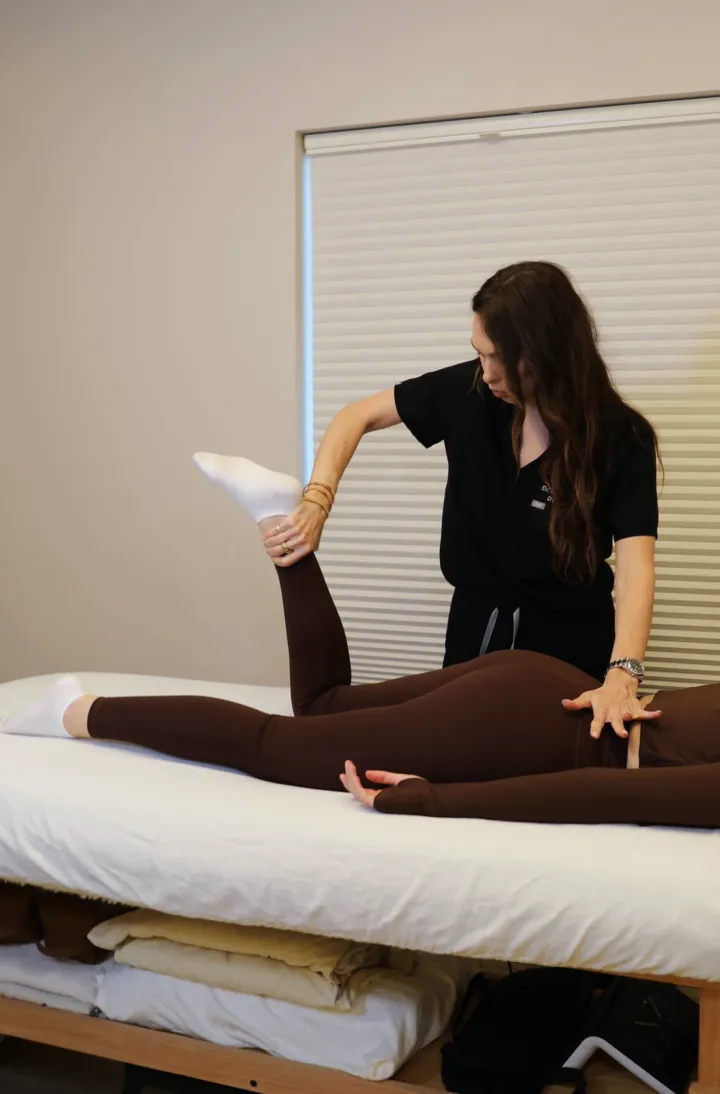
Pain traveling from your lower back or buttock into your leg doesn’t always mean you have a herniated disc.
Sciatica is commonly associated with spinal disc problems, but similar symptoms can also arise from irritation of the sciatic nerve outside the spine or from muscular trigger points that refer pain into the buttock and leg.
The challenge is that these conditions can feel remarkably similar, even though their underlying mechanisms—and appropriate treatment approaches—may differ.
At Sports Acupuncturist in Northbrook, Illinois, we use orthopedic assessment, movement evaluation, and manual muscle testing to investigate potential contributors to sciatic-type pain.
Our approach combines sports acupuncture, motor point acupuncture, and trigger point dry needling, with treatment individualized according to the assessment findings.
What Is Sciatica?

Sciatica describes pain that travels along the distribution of the sciatic nerve, typically affecting one side of the body.
Symptoms may include:
- Sharp, shooting, or electric-like pain traveling into the buttock or leg
- Burning sensations along the back or side of the leg
- Tingling or numbness
- Pain that worsens with prolonged sitting
- Discomfort when bending forward or changing positions
- Weakness in certain leg or foot muscles
The sciatic nerve originates from nerve roots in the lower lumbar and upper sacral spine, primarily L4–S3.
These nerve roots join to form the sciatic nerve, which travels through the deep gluteal region and down the posterior thigh before dividing into its major branches.
Is Sciatica Always Caused by a Herniated Disc?
No. A herniated disc is one possible cause, but it is not the only explanation for sciatic-type pain.
Clinically, it’s important to distinguish between three possibilities:
1. Lumbar radicular pain: Pain arising from irritation or inflammation of a spinal nerve root.
2. Sciatic nerve irritation outside the spine: Symptoms associated with irritation or entrapment of the sciatic nerve along its peripheral course.
3. Referred muscular pain: Pain generated by muscles or other structures that can resemble sciatica without direct involvement of the sciatic nerve.
These conditions may overlap, and symptoms alone cannot always distinguish them.
Understanding which structures may be contributing is an important part of developing an appropriate treatment plan.
Three Common Sources of Sciatica and Sciatica-Like Pain
1. Lumbar Disc Problems and Nerve Root Irritation
One of the most recognized causes of sciatica is irritation of a lumbar nerve root.
This may occur with:
- Lumbar disc herniation
- Disc protrusion
- Degenerative changes
- Foraminal narrowing
- Lumbar spinal stenosis
When a nerve root becomes irritated, patients may experience pain radiating from the lower back into the buttock, thigh, calf, or foot.
Depending on the affected nerve root, symptoms may also include altered sensation, reflex changes, or muscle weakness.
However, the presence of a disc bulge on MRI does not automatically mean it is responsible for the patient’s symptoms.
Disc abnormalities are frequently observed in people without pain.
For this reason, imaging findings should be interpreted alongside the patient’s symptoms and physical examination.
2. Piriformis Syndrome and Deep Gluteal Syndrome
The sciatic nerve travels through the deep gluteal region, where it passes near the piriformis and other deep hip rotator muscles.
In some patients, irritation or entrapment of the sciatic nerve in this region may contribute to buttock pain and symptoms traveling into the leg.
Piriformis syndrome is a commonly used term for suspected sciatic nerve irritation associated with the piriformis muscle.
However, deep gluteal syndrome is a broader term describing non-disc-related sciatic nerve entrapment in the deep gluteal space.
Potential contributing structures include:
- Piriformis
- Other deep hip rotator muscles
- Fibrous bands
- Adjacent tendons and soft tissues
Symptoms may include deep buttock pain, discomfort with prolonged sitting, and pain radiating into the posterior thigh.
Unlike lumbar nerve root irritation, symptoms may originate primarily in the gluteal region rather than the lower back.
Importantly, not every tight or tender piriformis muscle is compressing the sciatic nerve. A proper assessment is necessary before attributing symptoms to piriformis syndrome.
3. Gluteus Minimus Trigger Points: When Muscle Pain Mimics Sciatica
One of the most overlooked possibilities in patients with sciatica-like symptoms is referred pain from the gluteal muscles.
The gluteus minimus is particularly interesting because its myofascial trigger points can produce pain patterns extending beyond the hip.
Depending on the location of the trigger point, referred pain may travel along the lateral or posterior thigh and sometimes farther down the leg.
This can resemble the distribution of sciatic pain.
However, there is an important distinction:
Pain referred from the gluteus minimus does not necessarily indicate irritation or compression of the sciatic nerve.
In other words, a patient may experience pain that feels like sciatica even when the primary pain generator is muscular.
This is sometimes described as pseudosciatica or sciatica-like referred pain.
Trigger points in the gluteus medius and other hip muscles may also contribute to overlapping pain patterns.
Muscular tenderness and reproduction of familiar pain can provide useful clinical information, although trigger point findings alone cannot definitively establish the source of symptoms.
Why Treating Only Where It Hurts May Not Be Enough
Sciatic-type pain can involve several structures, including the lumbar spine, peripheral nerves, muscles, and surrounding soft tissues.
For example, a patient may experience pain in the posterior thigh while the contributing problem is located in the lumbar spine.
Another patient may have similar pain associated with deep gluteal structures.
A third may have referred pain from a sensitive gluteal muscle.
Although the symptoms overlap, the underlying mechanisms can differ.
This is why our approach begins with assessment rather than assuming that every patient with radiating leg pain has the same condition.
How We Assess Sciatica at Sports Acupuncturist
Our clinical approach combines orthopedic evaluation with muscle-performance assessment to identify findings that may help guide treatment.

Step 1
Posture and Movement Assessment
We begin by evaluating how you stand, move, and distribute load through your lumbar spine, pelvis, and hips.
This may include assessing:
- Lumbar and pelvic movement
- Hip mobility
- Movement restrictions
- Muscle compensation patterns
- Positions that reproduce or relieve symptoms
The goal is to understand how your symptoms respond to movement and identify potentially relevant mechanical factors.
Step 2
Orthopedic Testing
We use appropriate orthopedic and neurological screening tests to help distinguish possible sources of radiating leg pain.
Depending on your symptoms, these may include:
Straight Leg Raise Test
Used to assess neural mechanosensitivity and possible lumbosacral nerve root involvement.
Slump Test
Evaluates the response of neural structures to combined spinal and lower-limb positioning.
Lumbar Movement Testing
Helps determine whether spinal movements reproduce, reduce, or change the location of symptoms.
Hip and Deep Gluteal Assessment
Evaluates whether hip positioning, muscle loading, or pressure over deep gluteal structures reproduces familiar symptoms.
When indicated, neurological screening may include strength, sensation, and reflex testing.
No single orthopedic test establishes the diagnosis. Findings are interpreted together.
Step 3
Manual Muscle Testing
We assess selected muscles that contribute to hip and pelvic movement and stability.
These may include:
- Gluteus maximus
- Gluteus medius
- Hip rotators
- Hamstrings
- Other muscles indicated by the examination
Muscle performance may be influenced by pain, neurological involvement, effort, fatigue, or movement strategy.
Manual muscle testing helps identify functional findings that can be reassessed during treatment, but it does not independently diagnose nerve compression or prove that a muscle is neurologically inhibited.
Step 4
Individualized Needling Treatment
Based on the assessment, treatment may incorporate motor point acupuncture, trigger point dry needling, and traditional acupuncture.
Each technique has a different clinical objective.
Step 5
Reassessment
When appropriate, we repeat selected movement or muscle tests after treatment.
This allows us to observe whether there has been a measurable or noticeable short-term change in pain, movement, or muscle performance.
Immediate improvements can be clinically useful, but they do not necessarily establish the original cause of symptoms or predict long-term recovery.
How Sports Acupuncture May Help Sciatica
Sports acupuncture is not a single needling technique.
Our approach uses different anatomical targets depending on the patient’s symptoms and examination findings.

Motor Point Acupuncture: Addressing Muscle Performance
Motor point acupuncture involves needling specific anatomical regions associated with the motor nerve supply to a muscle.
The goal is to influence neuromuscular function and evaluate whether muscle performance changes following treatment.
For patients with sciatic-type pain, we may assess gluteal and hip muscles that contribute to pelvic and lower-extremity movement.
If reduced muscle performance is identified, motor point acupuncture may be incorporated into the treatment plan.
Muscle function is then reassessed when appropriate.
Trigger Point Dry Needling: Addressing Muscular Pain Referral
Trigger point dry needling targets sensitive areas within muscles that may contribute to localized or referred pain.
For patients with sciatica-like symptoms, relevant muscles may include:
- Gluteus minimus
- Gluteus medius
- Piriformis
- Other deep hip muscles, when clinically appropriate
For example, if palpation of a gluteus minimus trigger point reproduces a patient’s familiar leg pain, this may suggest a muscular contribution.
Dry needling may help reduce pain and sensitivity in some musculoskeletal conditions.
However, evidence specifically supporting dry needling for gluteus minimus-related sciatica-like pain remains limited.
Importantly, dry needling a muscle does not automatically mean that an entrapped sciatic nerve has been released.
Traditional and Distal Acupuncture: Addressing Pain Modulation
Traditional acupuncture may also be incorporated to help manage pain and influence sensory processing.
Research suggests acupuncture can provide benefits for some patients with chronic low back pain and certain forms of sciatica.
Acupuncture’s effects may involve peripheral and central pain-modulation mechanisms.
The treatment approach is selected according to the clinical presentation rather than assuming one technique is appropriate for every patient.
The same general type of needle can be used for different anatomical targets and treatment objectives.
What Does Research Say About Acupuncture for Sciatica?
Research on acupuncture for sciatica is developing, and the findings are encouraging for certain patient populations.
A randomized clinical trial published in JAMA Internal Medicine in 2024 examined acupuncture for chronic sciatica associated with a herniated lumbar disc.
The study found greater improvements in leg pain and disability among participants receiving acupuncture compared with sham acupuncture.
Benefits were also evaluated during follow-up extending to 52 weeks.
These findings support acupuncture as a potential treatment option for some patients with chronic disc-related sciatica.
However, the results should not automatically be generalized to every cause of radiating leg pain, including deep gluteal syndrome or muscular referred pain.
Similarly, research on acupuncture for chronic low back pain supports its use as a nonpharmacological treatment option in appropriate patients.
At Sports Acupuncturist, we use this evidence alongside individualized assessment and clinical judgment.
Sciatica vs. Piriformis Syndrome vs. Gluteus Minimus Trigger Points
Although these conditions may produce similar symptoms, they involve different structures.
| Condition | Potential source | Common presentation |
|---|---|---|
| Lumbar radicular pain | Irritated spinal nerve root | Radiating leg pain, sometimes with numbness, tingling, or weakness |
| Deep gluteal syndrome | Sciatic nerve irritation or entrapment outside the spine | Deep buttock pain, often aggravated by sitting, with possible leg radiation |
| Gluteus minimus referred pain | Muscular pain referral | Buttock, lateral thigh, or leg pain that may resemble sciatica without direct nerve involvement |
These are not mutually exclusive diagnoses. Some patients may have more than one contributing condition.
A thorough examination helps determine whether additional medical evaluation or imaging is appropriate.
When Should You Seek Medical Attention for Sciatica?
Many cases of sciatic-type pain improve with conservative management, but some symptoms require prompt medical evaluation.
Seek emergency care if you develop:
- New urinary retention or loss of bladder or bowel control
- Numbness in the saddle or groin region
- Rapidly progressing leg weakness
- Severe neurological symptoms affecting both legs
These may indicate significant neurological compression, including cauda equina syndrome.
New foot drop, progressive weakness, fever with severe back pain, or other concerning symptoms also warrant prompt medical assessment.
Sports acupuncture does not replace emergency care, indicated imaging, or surgical evaluation.
What to Expect
01
Assessment
A detailed look at how your body moves, identifying restrictions, imbalances, and overload.
02
Understanding the Cause
We connect your symptoms to how your body is functioning – not just where it hurts.
03
Targeted Treatment
A combination of acupuncture, dry needling, and motor point work based on your needs.
04
Ongoing Progress
Treatment evolves as your body adapts, focusing on long-term results and better movement.
Sciatica Treatment in Northbrook and Chicago’s North Shore
If you’re experiencing persistent buttock pain, shooting leg pain, or symptoms commonly described as sciatica, understanding the potential source is an important first step.
At Sports Acupuncturist, we combine orthopedic assessment, manual muscle testing, motor point acupuncture, and dry needling to develop an individualized approach to musculoskeletal pain.
We serve patients from Northbrook, Deerfield, Bannockburn, Highland Park, Glenview, Northfield, and surrounding North Shore communities.
Sciatica-like pain doesn’t always begin where you feel it. Our approach starts by investigating what may be contributing to your symptoms.
Our Address
Sports Acupuncturist1535 Lake Cook Rd, Suite 405
Northbrook, IL 60062
Hours
By appointment only
Ready to find out what’s contributing to your pain?
Schedule an appointment for an individualized musculoskeletal assessment and treatment plan.
Initial Consultation + Treatment
45-60 minutes
A comprehensive evaluation, movement assessment, and your first treatment.
1535 Lake Cook Rd, Suite 405
Northbrook, IL 60062
By appointment only
Frequently Asked Questions About Sciatica
Can sciatica happen without lower back pain?
Yes. Some patients experience primarily buttock or leg pain, with little or no lower back discomfort.
Lumbar nerve root irritation can produce leg-dominant symptoms.
Pain arising from deep gluteal structures or muscular trigger points can also resemble sciatica without significant back pain.
Can a tight piriformis muscle cause sciatica?
In some cases, the sciatic nerve may become irritated or entrapped within the deep gluteal region.
Piriformis syndrome is one possible explanation, although other structures can also contribute.
A tight or tender piriformis muscle alone does not establish sciatic nerve compression.
Can gluteus minimus trigger points cause sciatic pain?
Gluteus minimus trigger points can produce referred pain patterns resembling sciatica, sometimes extending down the thigh and leg.
However, this is not necessarily true sciatic nerve pain.
The distinction matters because muscular referred pain and nerve-related pain may require different management strategies.
How do I know whether my sciatica is coming from my back or my glutes?
Symptoms can overlap, so location alone is not always reliable.
A clinician may evaluate lumbar movement, neural tension, neurological findings, hip movement, and whether muscle palpation reproduces familiar symptoms.
The combined findings help guide the differential diagnosis.
Does sciatica always mean I have a herniated disc?
No. Although disc herniation is a common cause of lumbar radicular pain, other conditions can irritate nerve roots or the sciatic nerve.
Some muscular conditions also produce referred pain that resembles sciatica without involving the nerve.
Can acupuncture help sciatica?
Research suggests acupuncture may help reduce pain and disability in some patients with chronic disc-related sciatica.
The expected benefit depends on the underlying condition, symptom severity, and individual response.
What’s the difference between dry needling and motor point acupuncture?
Trigger point dry needling primarily targets sensitive muscular areas associated with pain and tenderness.
Motor point acupuncture targets anatomical regions associated with a muscle’s motor nerve supply, with the goal of influencing muscle performance.
At Sports Acupuncturist, we may use either or both techniques depending on the examination findings.
Can sports acupuncture be combined with physical therapy?
Yes.
Physical therapy can help address strength, mobility, movement tolerance, and functional rehabilitation.
Sports acupuncture may be used alongside physical therapy to help manage pain and address selected muscle-performance findings.
The approaches can complement one another when coordinated appropriately.
How many acupuncture treatments will I need for sciatica?
Treatment needs vary according to the suspected source of symptoms, duration, severity, neurological findings, and response to care.
Following the initial assessment, we can discuss an individualized treatment plan and evaluate progress over subsequent visits.
References
- Acupuncture for Chronic Sciatica From Herniated Disk: A Randomized Clinical Trial. JAMA Internal Medicine, 2024.
- Noninvasive Treatments for Acute, Subacute, and Chronic Low Back Pain: A Clinical Practice Guideline From the American College of Physicians. Annals of Internal Medicine, 2017.
- Brinjikji et al. Systematic Literature Review of Imaging Features of Spinal Degeneration in Asymptomatic Populations. American Journal of Neuroradiology, 2015.
- Martin et al. Deep Gluteal Syndrome. Journal of Hip Preservation Surgery, 2015.

About the Author
Dr. Lijana Shestopal, DTCM, L.Ac.
Dr. Lijana Shestopal is an Illinois-licensed acupuncturist specializing in sports acupuncture, orthopedic conditions, and musculoskeletal pain.
She earned her master’s degree in Acupuncture and Herbal Medicine from the Midwest College of Oriental Medicine and subsequently completed her Doctor of Traditional Chinese Medicine (DTCM) degree at Five Branches University.
She holds national board certification as a Diplomate of Acupuncture and Herbal Medicine (NCBAHM) and has completed extensive advanced training in orthopedic and sports acupuncture, including musculoskeletal assessment, manual muscle testing, motor point acupuncture, and dry needling.
Her clinical approach integrates traditional acupuncture with modern anatomical and orthopedic assessment techniques to address pain, muscle dysfunction, and movement-related conditions.
Articles on this topic

Treatment Methods11 min read
Movement Health · Sciatica & Hip Function
Pain in your glute or shooting down your leg?

Sports Injuries3 min read
Why Back Pain Keeps Coming Back in Active People — and What’s Usually Missed
Struggling with back pain despite treatment? Discover the surprising causes of recurring back pain and regain your comfort.
Treatment Methods8 min read
What’s Really Causing Lower Back Pain
Learn how to address low back pain effectively. Find insights into its causes and the best methods to achieve relief.