Tennis Elbow or Golfer’s Elbow That Keeps Coming Back? We Look Beyond the Painful Tendon.

Does your elbow hurt when you pick up a coffee cup, lift weights, or play tennis, pickleball, or golf?
Maybe you’ve tried resting it, stretching your forearm, or massaging the painful area.
The pain improves temporarily, but returns when you start using your arm again.
Why?
Because sometimes the painful tendon is only part of the problem.
Your elbow, wrist, and forearm muscles work together every time you grip, lift, or move your arm. When certain muscles aren’t performing effectively, other muscles may compensate, potentially contributing to discomfort and altered movement.
At Sports Acupuncturist, we don’t simply place needles where your elbow hurts.
We use orthopedic testing, manual muscle testing, and movement assessment to evaluate the muscles and structures involved.
Then we use specialized acupuncture techniques to address the findings.
Our approach is simple: identify what isn’t working well, address the muscles contributing to the problem, and reassess how your body responds.
What’s the Difference Between Tennis Elbow and Golfer’s Elbow?
Although both conditions cause elbow pain, they affect different areas.
Tennis Elbow: Pain on the Outside of the Elbow
Tennis elbow, also called lateral epicondylalgia or lateral elbow tendinopathy, typically causes pain on the outside of the elbow.
It commonly involves the tendon region associated with the wrist extensor muscles.
You may notice:
- Pain when lifting objects
- Discomfort when gripping a racket or paddle
- Pain when extending your wrist
- Tenderness on the outside of the elbow
- Discomfort during weight training or everyday activities
Golfer’s Elbow: Pain on the Inside of the Elbow
Golfer’s elbow, also called medial epicondylalgia, typically causes pain on the inside of the elbow.
It commonly involves the tendon region associated with the wrist flexor and pronator muscles.
Symptoms may include:
- Pain when gripping or lifting
- Tenderness along the inside of the elbow
- Discomfort during golf swings
- Pain with wrist flexion or forearm rotation
- Symptoms during repetitive arm movements
You don’t have to play tennis or golf to develop either condition.
We also see elbow complaints associated with weight training, repetitive work, and other activities that place repeated demands on the forearm.
Why Does Tennis Elbow Keep Coming Back?
One common reason elbow pain persists is that the forearm muscles and tendons continue to experience demands they aren’t currently tolerating well.
Tennis elbow often develops when repetitive loading exceeds the capacity of the tendon and surrounding tissues.
But the muscles attached to those tendons matter, too.
Some patients have significant muscular tenderness and tension.
Others demonstrate reduced muscle performance or pain when contracting the forearm muscles.
Sometimes both findings occur together.
For example, a patient may have tenderness in the wrist extensors along with reduced strength during manual muscle testing.
Simply relaxing a painful muscle may provide relief, but it doesn’t necessarily address every relevant muscle-function finding.
That’s why we take a two-part approach when the assessment indicates that both issues are present.
First, we address muscles that demonstrate reduced performance.
Second, we address muscles that are excessively tense, tender, or painful.
The goal is to improve how the muscles work together rather than focusing exclusively on the painful tendon.
Can Tight or Weak Forearm Muscles Contribute to Tennis Elbow?
Yes. Muscular tenderness, reduced strength, and repetitive loading can all be relevant to elbow symptoms.
Your wrist extensors and flexors help control wrist movement and stabilize the wrist during gripping.
When these muscles are repeatedly loaded, they may become painful or fatigued.
Pain itself can also temporarily reduce how much force a muscle produces during testing.
That’s why a muscle that tests weak isn’t necessarily neurologically inactive.
At Sports Acupuncturist, we examine both muscular tenderness and muscle performance to help determine which treatment techniques may be appropriate.
Why Stretching or Massage Doesn’t Always Resolve Elbow Pain
Stretching and massage may help reduce muscular discomfort.
However, tendon-related elbow pain can involve more than tight muscles.
For example, a patient may experience muscular tenderness while also demonstrating reduced strength or pain during resisted wrist movement.
Addressing tenderness alone may not resolve every relevant finding.
Instead of automatically treating every painful forearm muscle as tight, we evaluate how it performs.
This helps us distinguish between findings that may benefit from trigger point treatment and those that may warrant a different approach.
How We Assess Tennis Elbow and Golfer’s Elbow
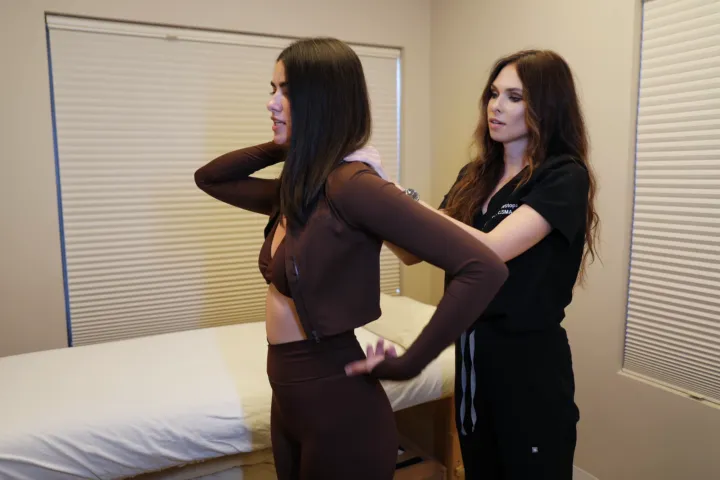
Our assessment follows five steps.
1
Posture and Movement Assessment
We observe relevant upper-extremity positioning and movement.
This helps us understand how the elbow, wrist, shoulder, and surrounding structures function together.
2
Orthopedic Testing
We use orthopedic tests to assess possible involvement of the elbow tendons, surrounding muscles, and other structures.
We also consider whether symptoms may be associated with the cervical spine or shoulder.
Not every case of elbow pain originates at the elbow.
3
Manual Muscle Testing
We assess the wrist extensor and flexor muscles and other relevant muscle groups.
We’re looking for differences in muscle performance, pain during testing, and findings that may help guide treatment.
4
Individualized Needling
We select acupuncture techniques based on the examination findings.
5
Reassessment
We repeat relevant muscle tests or movements to evaluate how the patient responds.
This allows us to assess immediate changes and guide subsequent treatment.
Three Different Needling Techniques.
Three Different Purposes.
One of the biggest differences in our approach is that we don’t use every needle for the same purpose.
Although the needles may look identical, the anatomical location and treatment objective can differ.

Motor Point Acupuncture: Addressing Muscle Function
Motor points are anatomical regions associated with a muscle’s motor nerve supply.
Motor point acupuncture involves placing a fine needle at a selected motor point to stimulate the neuromuscular system.
Why does this matter for tennis elbow?
The wrist extensor muscles play an important role in stabilizing the wrist during gripping and lifting.
The wrist flexor muscles contribute to gripping and wrist movement.
During manual muscle testing, we sometimes identify muscles that demonstrate reduced strength or difficulty contributing to a movement.
Motor point acupuncture is one technique we use when addressing these findings.
For example, if a wrist extensor demonstrates reduced performance during testing, we may use motor point acupuncture at a selected anatomical location associated with that muscle.
We then repeat the muscle test to evaluate whether performance has changed.
Some patients demonstrate an immediate improvement during reassessment.
Our objective is to address muscle performance, not simply reduce pain at the treatment site.
Dry Needling: Addressing Trigger Points and Muscular Tension
Dry needling has a different treatment objective.
It targets areas of muscular tenderness and sensitivity, often described as trigger points or knots.
These areas may contribute to pain, restricted movement, or discomfort during activity.
Dry needling may help reduce muscular pain and sensitivity.
However, reducing trigger point discomfort doesn’t necessarily address every strength or movement-related finding identified during an assessment.
That’s why we don’t automatically use trigger point dry needling on every muscle that tests weak.
Instead, we determine whether the findings suggest muscular tenderness, reduced performance, or a combination of both.
When both findings are present, we may combine dry needling with motor point acupuncture.
Acupuncture: Addressing Pain and Local Tissue Responses
Acupuncture can also be used for broader pain management.
Traditional acupuncture often uses points selected according to meridian-based treatment principles.
Some of these points may be located away from the painful elbow. This is called distal needling.
For example, acupuncture points elsewhere on the arm or body may be used as part of treatment for elbow pain.
How can a needle away from your elbow affect elbow pain?
Acupuncture stimulates sensory nerves and may influence how pain signals are processed within the nervous system.
Research has investigated several mechanisms, including endogenous opioid signaling and other pain-modulating pathways.
Acupuncture may also influence local circulation and other physiological responses.
These effects may contribute to symptom improvement, although changes in blood flow alone do not establish that tendon healing has accelerated.
At Sports Acupuncturist, we may combine distal acupuncture with anatomically targeted motor point acupuncture and dry needling.
Each technique is selected for a specific treatment objective.
Same type of needle. Different anatomical targets. Different treatment goals.
Does Acupuncture Actually Work for Tennis Elbow?
Yes. Acupuncture is a treatment option for tennis elbow, and clinical research has reported improvements in pain and function in some patients.
A 2024 systematic review examining treatments for lateral elbow tendinopathy found that acupuncture may improve disability compared with sham treatment.
A separate 2024 systematic review and meta-analysis examined dry needling for tennis elbow and reported improvements in pain and function.
These findings support considering acupuncture and related needling techniques as part of conservative elbow care.
It’s important to distinguish the research on acupuncture and dry needling from research specifically evaluating motor point acupuncture.
At Sports Acupuncturist, we use these techniques according to the findings of your musculoskeletal assessment.
How Can Sports Acupuncture Help Tendon-Related Elbow Pain?
Tendons connect muscles to bones.
In tennis elbow and golfer’s elbow, symptoms commonly involve the tendon attachment regions of the forearm muscles.
These tissues can become painful when repetitive demands exceed their current capacity.
Acupuncture may help manage pain and influence local physiological responses, including circulation.
Motor point acupuncture may be incorporated when manual muscle testing identifies reduced muscle performance.
Dry needling may be used when relevant muscular trigger points or tenderness are present.
By combining techniques, we can address several findings that may be contributing to the patient’s symptoms.
The objective is to help reduce pain and improve comfortable movement while considering the muscle and tendon structures involved.
Why Combine Sports Acupuncture With Physical Therapy?
Physical therapy commonly emphasizes progressive strengthening and tendon loading.
Sports acupuncture can complement rehabilitation by helping manage pain and addressing muscular findings identified during assessment.
For example, a patient may find certain strengthening exercises uncomfortable because of elbow pain.
Acupuncture may help reduce symptoms, potentially making it easier to participate in rehabilitation.
When reduced muscle performance is identified during testing, we may also incorporate motor point acupuncture and reassess the response.
The two approaches can work together as part of a broader treatment plan.
Tennis Elbow Treatment for Tennis and Pickleball Players
Tennis and pickleball involve repetitive wrist and forearm movements.
These activities can place significant demands on the wrist extensor muscles and their tendon attachments.
Patients may develop symptoms during backhand strokes, gripping, or other repeated movements.
At Sports Acupuncturist, we assess the relevant muscles and elbow structures to help determine which needling techniques may be appropriate.
Our focus is on the musculoskeletal examination and treatment rather than coaching racket technique or designing training programs.
Golfer’s Elbow Treatment for Golfers
Golf places repeated demands on the wrist flexor and forearm muscles.
When these tissues become painful, patients may notice discomfort along the inside of the elbow during gripping or swinging.
We evaluate the wrist flexor muscles, relevant tendon regions, and other structures that may contribute to symptoms.
Treatment is selected according to the findings.
Why Choose Sports Acupuncture for Elbow Pain?
We don’t use the same treatment for every painful elbow.
We examine the muscles responsible for wrist and elbow movement, assess their performance, and select needling techniques based on the findings.
When a patient has both muscular tenderness and reduced muscle performance, we can address those findings using different techniques.
Our approach is particularly relevant to patients interested in understanding how muscle function may relate to recurring elbow pain.
Whether you’re dealing with tennis elbow, golfer’s elbow, or discomfort during everyday gripping and lifting, we look beyond the painful area.
What to Expect
01
Assessment
A detailed look at how your body moves, identifying restrictions, imbalances, and overload.
02
Understanding the Cause
We connect your symptoms to how your body is functioning – not just where it hurts.
03
Targeted Treatment
A combination of acupuncture, dry needling, and motor point work based on your needs.
04
Ongoing Progress
Treatment evolves as your body adapts, focusing on long-term results and better movement.
Tennis Elbow and Golfer’s Elbow Treatment on Chicago’s North Shore

Sports Acupuncturist provides assessment-based acupuncture care for elbow pain and other musculoskeletal conditions throughout Chicago’s North Shore.
We serve patients from Northbrook, Bannockburn, Deerfield, Highland Park, Glenview, Northfield, and surrounding communities.
Our Address
Sports Acupuncturist1535 Lake Cook Rd, Suite 405
Northbrook, IL 60062
Hours
By appointment only
Ready to find out what’s contributing to your elbow pain?
Schedule an appointment for an individualized musculoskeletal assessment and treatment plan.
Initial Consultation + Treatment
45-60 minutes
A comprehensive evaluation, movement assessment, and your first treatment.
1535 Lake Cook Rd, Suite 405
Northbrook, IL 60062
By appointment only
Frequently Asked Questions
Can acupuncture really help tennis elbow?
Yes. Research supports acupuncture as a treatment option for tennis elbow, with studies reporting improvements in pain and function. At Sports Acupuncturist, we combine acupuncture with orthopedic assessment and muscle testing to guide treatment.
Why does my tennis elbow keep coming back?
Recurring tennis elbow may involve repetitive tendon loading, muscular tenderness, reduced muscle performance, or a combination of factors. We assess the forearm muscles and surrounding structures to identify findings that may be relevant to treatment.
Can tennis elbow be caused by tight muscles?
Muscular tension can contribute to symptoms around the elbow. However, tennis elbow commonly involves the tendon region associated with the wrist extensor muscles. We assess both muscular tenderness and muscle performance rather than assuming that every painful muscle is simply tight.
Can weak forearm muscles contribute to elbow pain?
Yes. Reduced muscle strength or endurance can be relevant to how the forearm tolerates repeated demands. Pain can also temporarily reduce muscle performance. Manual muscle testing helps us evaluate relevant findings during the examination.
Can dry needling help tennis elbow or golfer’s elbow?
Yes, dry needling may help when muscular trigger points or tenderness contribute to symptoms. If we also identify reduced muscle performance, we may incorporate motor point acupuncture for a different treatment objective.
What’s the difference between dry needling and motor point acupuncture?
Although both techniques use the same type of acupuncture needle, they target different anatomical areas and serve different treatment purposes.
Dry needling primarily targets trigger points—those painful, sensitive knots within muscles that can contribute to tension and discomfort. It helps relieve muscular pain and sensitivity, but treating a trigger point doesn’t necessarily address a muscle’s reduced strength or altered activation.
Motor point acupuncture targets specific anatomical locations associated with a muscle’s motor nerve supply. These points are involved in communication between the nervous system and the muscle, which controls how the muscle contracts.
When manual muscle testing identifies a muscle that isn’t responding or contracting effectively, we may use motor point acupuncture to stimulate the neuromuscular system and then reassess the muscle’s performance.
In some patients, we observe an immediate improvement in muscle response following treatment.
The difference? Dry needling focuses on painful trigger points, while motor point acupuncture is used to address muscle performance and neuromuscular response.
At Sports Acupuncturist, we frequently combine both techniques when appropriate. We assess which muscles demonstrate reduced performance and which have painful trigger points, then select the needling technique accordingly.
Can sports acupuncture be combined with physical therapy?
Absolutely. Sports acupuncture can be an excellent complement to physical therapy, whether used before starting rehabilitation or alongside an existing physical therapy program.
Physical therapy focuses on strengthening muscles, improving mobility, and restoring function through progressive exercise.
But what happens when a muscle isn’t performing effectively during those exercises?
That’s where motor point acupuncture may be helpful.
Through manual muscle testing, we identify muscles demonstrating reduced performance. We then use motor point acupuncture to stimulate selected neuromuscular points and reassess how those muscles respond.
When treatment improves pain or muscle performance, patients may find it easier to perform their rehabilitation exercises.
Think of it this way: sports acupuncture helps address muscle activation and pain, while physical therapy builds strength and improves the muscle’s ability to tolerate activity.
By combining these approaches, we aim to support more comfortable, effective rehabilitation and better overall muscle function.
Research References
- 2024 systematic review of noninvasive treatments for lateral elbow tendinopathy. Found evidence that acupuncture may improve disability compared with sham treatment, although certainty was limited.
- 2024 systematic review and meta-analysis of dry needling for tennis elbow. Evaluated the effects of dry needling on pain and function in patients with lateral epicondylitis.

About the Author
Dr. Lijana Shestopal, DTCM, L.Ac.
Dr. Lijana Shestopal is an Illinois-licensed acupuncturist specializing in sports acupuncture, orthopedic conditions, and musculoskeletal pain.
She earned her Master’s degree in Acupuncture and Herbal Medicine from the Midwest College of Oriental Medicine and subsequently completed her Doctor of Traditional Chinese Medicine (DTCM) degree at Five Branches University.
In addition to her formal education, Dr. Shestopal has completed extensive advanced training in orthopedic and sports acupuncture, with a particular focus on musculoskeletal assessment, manual muscle testing, motor point acupuncture, and dry needling.
She holds national board certification as a Diplomate of Acupuncture and Herbal Medicine through the National Certification Board for Acupuncture and Herbal Medicine (NCBAHM).
Her clinical approach combines traditional acupuncture with modern anatomical and orthopedic assessment techniques to address pain, muscle dysfunction, and movement-related conditions.
At Sports Acupuncturist, she focuses on identifying potential contributors to musculoskeletal pain rather than treating symptoms in isolation, using individualized treatment strategies to help patients improve function and return to their activities.
Articles on this topic
Recovery & Performance8 min read
How Pickleball and Paddle Players Can Improve Performance and Extend Their Playing Years with Sports Acupuncture
Understand the physical demands of pickleball and how sports acupuncture can target and fix pain from playing.
Sports Injuries13 min read
Sports Acupuncture for Tennis Elbow in Chicago: What Works Better Than Physical Therapy
Learn about tennis elbow and explore treatment options. Find out how to manage and heal from this frustrating condition.