IT Band Syndrome Treatment in Northbrook, IL

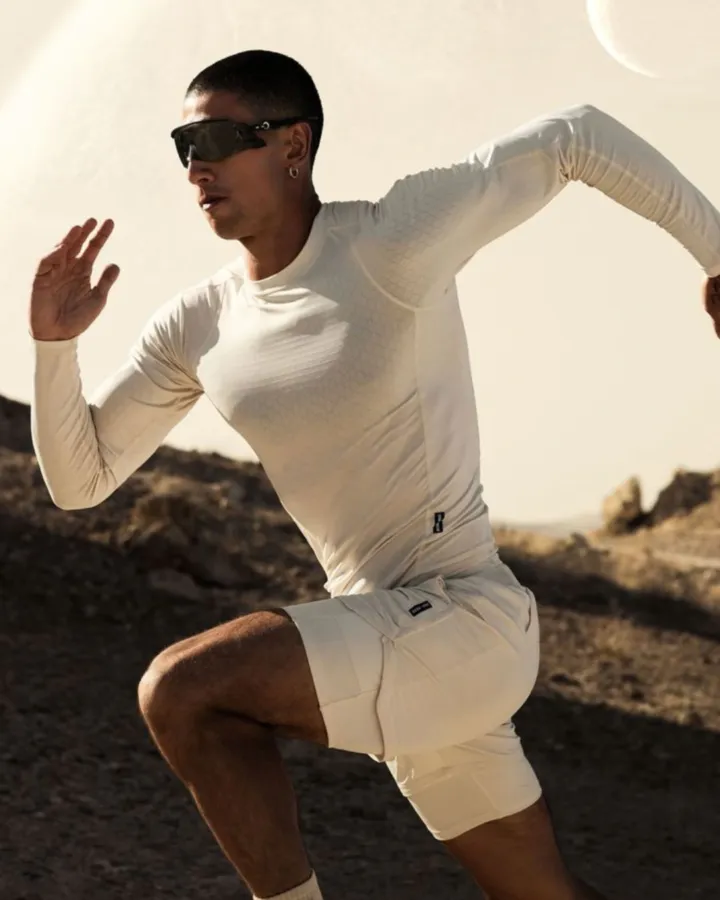
Do you experience sharp or burning pain on the outside of your knee when running? Does the outside of your thigh constantly feel tight, no matter how much you stretch or foam roll it?
Iliotibial band syndrome, commonly known as IT band syndrome or ITBS, is a frequent overuse injury among runners, cyclists and other active individuals.
Although the pain is typically felt on the outside of the knee, contributing factors may involve the hips, pelvis and surrounding muscles.
At Sports Acupuncturist in Northbrook, Illinois, we combine orthopedic testing, manual muscle testing, postural and movement assessment, motor point acupuncture and trigger point dry needling to address both the pain and its potentially contributing factors.
Rather than repeatedly trying to release the IT band, we investigate why it may be experiencing excessive tension and loading in the first place.
Common Symptoms of IT Band Syndrome

- Sharp or burning pain on the outside of the knee
- Pain that develops after running a certain distance
- Knee pain that worsens during downhill running
- Pain when walking downstairs
- Discomfort on the outside of the knee during cycling
- Tenderness along the outside of the thigh
- Persistent outer thigh tightness
- Pain that improves with rest but returns during exercise
- Difficulty increasing running distance without pain
Many runners describe being able to start their run without discomfort, only to develop pain after a few miles. As the condition progresses, symptoms may begin earlier during activity.
What Is the IT Band?
The iliotibial band is a thick band of connective tissue that runs along the outside of your thigh, extending from the pelvis to just below the knee.
Unlike a muscle, the IT band cannot actively contract or relax on its own.
Instead, its tension is influenced partly by two muscles connected to it:
| Muscle | What It Does |
|---|---|
| Tensor fasciae latae (TFL) | A small muscle located at the front and outside of the hip that helps control hip and leg movement. |
| Gluteus maximus | Your largest glute muscle, which provides power during walking, running, climbing stairs and other movements. |
The IT band also helps provide stability to the hip and knee during movement.
Because it connects the pelvis to the lower leg, changes in muscular function and movement at the hip can influence the forces experienced farther down the leg.
What Causes IT Band Syndrome?
IT band syndrome was previously commonly referred to as IT band friction syndrome. The traditional explanation was that the IT band repeatedly rubbed against the bone on the outside of the knee during bending and straightening.
More recent research suggests that compression of sensitive tissues beneath the IT band may play a greater role than previously believed.
When these tissues are repeatedly exposed to more pressure than they can tolerate, they may become irritated and painful.
Several factors may contribute to this process:
- Sudden increases in running distance or intensity
- Frequent downhill running
- Insufficient recovery between workouts
- Reduced glute strength or endurance
- Overworked muscles on the outside of the hip
- Changes in pelvic positioning
- Poor control of the leg during movement
- Restricted hip or ankle mobility
- Previous lower-body injuries
- Repetitive movements associated with running and cycling
Not everyone with IT band syndrome has the same contributing factors. This is why an individualized assessment is important.
Why Stretching Your IT Band May Not Work
One of the most common recommendations for IT band syndrome is to stretch or foam roll the outside of the thigh.
However, the IT band is not a muscle. It is a strong, relatively resistant band of connective tissue designed to withstand substantial physical forces.
Stretching exercises aimed at the IT band may primarily affect the surrounding muscles rather than meaningfully lengthening the band itself.
Foam rolling may temporarily reduce the sensation of tightness, but it does not necessarily address why that tension keeps returning.
Furthermore, aggressively foam rolling an already irritated area on the outside of the knee may increase discomfort by applying additional pressure to sensitive tissues.
Instead of asking how to stretch the IT band, we should be asking:
- Are the muscles connected to the IT band overworked?
- Are other hip muscles providing enough support?
- Is the pelvis moving efficiently during running?
- Is the knee experiencing excessive loading?
- Has training intensity increased faster than the body can adapt?
The IT band may be where you experience the discomfort, but it may not be where the problem begins.
The Relationship Between Your Glutes and IT Band Syndrome
Your glute muscles play an important role in controlling the pelvis and lower body during movement.
Every time you take a step while walking or running, your body briefly relies on one leg for support.
The gluteus medius, located on the side of your hip, helps prevent the pelvis from dropping excessively and assists in controlling the position of your thigh.
The gluteus maximus helps generate power and control hip movement.
When these muscles do not contribute effectively, other muscles may compensate.
One of these muscles is the tensor fasciae latae, commonly called the TFL.
When the TFL Takes Over
The TFL is a relatively small muscle that assists with hip movement and directly connects to the IT band.
If other hip muscles are not providing sufficient support, the TFL may take on additional work.
Over time, this may contribute to excessive muscular tension and changes in the forces transmitted through the IT band.
A patient may experience persistent tightness along the outside of the thigh and repeatedly try to stretch or massage the area.
However, if the muscles contributing to the increased workload are not addressed, the sensation of tightness may continue to return.
Through manual muscle testing, we evaluate how well the relevant muscles are functioning rather than assuming that every tight muscle needs to be released.
How Pelvic Position Can Influence IT Band Tension
The position of your pelvis influences the resting length and working position of the muscles surrounding your hips.
Because the IT band begins near the pelvis and extends below the knee, assessing pelvic positioning may help identify factors contributing to recurring symptoms.
| Pelvic Position | What Happens to the Muscles | Potential Effect on the IT Band |
|---|---|---|
| Anterior pelvic tilt (pelvis tilted forward) | The hip flexors, including the TFL, may be held in a relatively shortened position, while the gluteus maximus and hamstrings may be held in a lengthened position. | If the glutes are not contributing effectively, the TFL may take on additional work, potentially increasing tension transmitted through the IT band. |
| Posterior pelvic tilt (pelvis tilted backward) | The gluteus maximus and hamstrings may be held in a relatively shortened position, while the hip flexors, including the TFL, may be held in a lengthened position. | The TFL may still feel tight despite being lengthened, particularly if it is working harder to control hip movement. Additional stretching may not be beneficial. |
| Elevated ilium (one side of the pelvis sitting higher) | If the thigh remains relatively vertical, the outer hip muscles on the elevated side may be held in a shorter position, while those on the lower side may be relatively lengthened. | Uneven muscular loading may contribute to differences in IT band tension between the two legs. |
| Pelvic drop during walking or running | When the unsupported side of the pelvis drops, the gluteus medius on the supporting leg is placed in a lengthened position and must work to control that movement. | Excessive inward movement of the supporting thigh may increase strain along the IT band and compression of sensitive tissues on the outside of the knee. |
For example, if the pelvis drops excessively on one side during running, the opposite hip may move inward relative to the pelvis, potentially increasing compression around sensitive structures.
However, pelvic tilt or asymmetry alone does not establish the cause of IT band syndrome.
We assess posture alongside muscle function and movement to determine whether these factors are relevant to your pain.
Why IT Band Syndrome Is Common Among Runners
Running requires thousands of repetitive movements during a single training session.
With each step, the muscles surrounding the hips, knees and ankles must work together to absorb forces and maintain control.
As muscles become fatigued, movement patterns may change. This can help explain why some runners experience IT band pain only after running a certain distance.
Common running-related contributing factors include:
- Increasing weekly mileage too quickly
- Adding longer runs without adequate preparation
- Introducing speed training
- Running downhill frequently
- Running repeatedly on uneven or sloped surfaces
- Reduced hip muscle endurance
- Insufficient lower-body strength training
- Inadequate recovery between runs
For some runners, the primary issue may involve muscular function or movement control. For others, the body may simply not have had enough time to adapt to an increase in training demands.
Identifying the difference is important for determining the appropriate treatment and return-to-running strategy.
IT Band Syndrome vs. Runner’s Knee
Although both conditions are common among runners, they typically involve different areas of the knee.
| Condition | Where It Hurts | Common Activities That Aggravate It |
|---|---|---|
| IT band syndrome | Outside of the knee | Running, particularly downhill, and repetitive cycling |
| Runner’s knee | Around or behind the kneecap | Squatting, stairs, running and prolonged sitting |
| Jumper’s knee | Directly below the kneecap | Jumping, explosive movements and running |
| Meniscus irritation or injury | Along the inside or outside of the knee joint | Twisting, deep squatting and certain weight-bearing movements |
Not all pain on the outside of the knee is caused by the IT band.
Orthopedic testing helps determine whether your symptoms are consistent with IT band syndrome or whether other knee structures may be involved.
How We Assess and Treat IT Band Syndrome
At Sports Acupuncturist, assessment extends beyond the area where you experience pain.
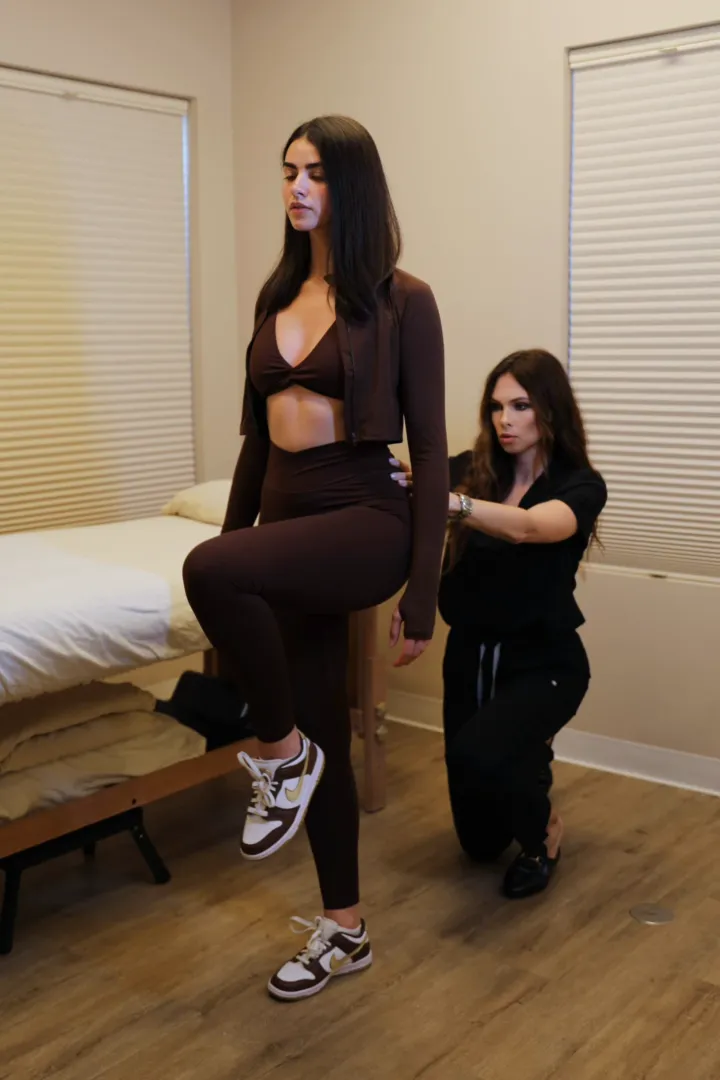
1
Postural Assessment
We evaluate the positioning of your pelvis, hips, knees, ankles and feet.
This helps us identify potential differences in how your body distributes weight and handles physical demands.
2
Orthopedic Testing
Specific physical tests help evaluate the structures around the knee and hip that may be contributing to your symptoms.
We also assess whether your pain may involve other structures, such as the meniscus, ligaments or surrounding tendons.
3
Manual Muscle Testing
We evaluate how well selected muscles can produce and maintain force.
Particular attention may be given to the glutes, TFL, quadriceps, hamstrings and other muscles that influence hip and knee movement.
This helps identify muscles that may be underperforming and others that may be compensating.
4
Functional Movement Assessment
We may assess movements such as standing on one leg, squatting, stepping down and walking.
This allows us to observe how your pelvis, hip, knee and ankle work together during movement.
We look at whether limitations involve flexibility, stability, muscle activation or difficulty controlling movement.
5
Individualized Treatment and Reassessment
Based on our findings, we select the appropriate needling techniques and may repeat relevant muscle and movement tests afterward to evaluate your response.
How Sports Acupuncture Helps With IT Band Syndrome
Sports acupuncture combines three complementary needling techniques.
| Treatment | What It May Help You Achieve |
|---|---|
| Motor point acupuncture | Improve the activation of underperforming muscles, including the glutes and other muscles supporting the hip and knee. |
| Trigger point dry needling | Reduce painful tension in overworked muscles, such as the TFL or surrounding thigh muscles. |
| Acupuncture | Reduce pain, influence local circulation and help regulate pain signals within the nervous system. |
For example, a runner experiencing persistent outer thigh tension may demonstrate reduced glute function during muscle testing alongside tenderness in the TFL.
In this situation, treatment may involve stimulating the underperforming glute muscles through motor point acupuncture while addressing painful muscular tension through dry needling.
Depending on the assessment, treatment may also involve the muscles surrounding the knee, hip, pelvis or lower leg.
The objective is not simply to release everything that feels tight but to improve the balance between muscles that may be working too hard and those that may not be contributing adequately.
Why Corrective Exercises Are Important for IT Band Syndrome
Acupuncture and dry needling may help address pain and muscular dysfunction. However, improving muscular endurance and the body’s ability to tolerate repetitive movements is particularly important for long-term management of IT band syndrome.
If you return to the same running distances, training intensity and movement habits without addressing contributing factors, symptoms may recur.
Depending on your individual needs, corrective exercises and rehabilitation may focus on:
| Exercise Focus | Purpose |
|---|---|
| Glute strengthening | Improve hip support and control during walking and running. |
| Single-leg stability exercises | Improve pelvic and leg control when supporting your body on one leg. |
| Hip muscle endurance | Help muscles maintain their function throughout longer runs. |
| Core strengthening | Improve coordination between the pelvis and upper body. |
| Ankle and hip mobility | Address genuine movement restrictions where present. |
| Running technique adjustments | Modify movement patterns when they appear to contribute to symptoms. |
| Gradual return to running | Allow tissues to adapt progressively to increasing physical demands. |
Not every runner needs the same corrective exercises.
Some may need greater hip mobility, while others may already have adequate flexibility but require better muscular control and strength.
Sports acupuncture can complement physical therapy and exercise-based rehabilitation by addressing pain, muscular tension and altered muscle activation.
How to Manage IT Band Syndrome While Running
Managing IT band syndrome does not always require completely stopping physical activity.
Depending on the severity of your symptoms, temporary adjustments may include:
- Reducing running distance or intensity
- Avoiding downhill running while symptoms are aggravated
- Allowing adequate recovery between runs
- Incorporating targeted strength training
- Avoiding aggressive foam rolling directly over the painful knee
- Choosing alternative activities that do not aggravate symptoms
- Gradually increasing training demands as symptoms improve
Continuing to run through progressively worsening pain may prolong irritation.
The goal is to help your body regain the ability to tolerate running rather than simply suppressing pain so you can continue training at the same intensity.
Does Acupuncture or Dry Needling Work for IT Band Syndrome?
A randomized clinical trial published in 2021 compared dry needling with shockwave therapy for patients with IT band syndrome.
Both treatment groups demonstrated improvements in pain and physical function during the study’s short follow-up period.
Research has also investigated the role of hip strengthening, activity modification and rehabilitation in managing IT band syndrome among runners.
While more research is needed to establish which treatment combinations provide the best long-term results, existing findings support considering needling techniques alongside appropriate rehabilitation.
Individual components of sports acupuncture have been studied and demonstrated positive outcomes in different areas of musculoskeletal care.
By combining these techniques with orthopedic assessment, muscle testing and movement evaluation, treatment can be individualized according to the factors potentially contributing to your symptoms.
Sports Acupuncture vs. Physical Therapy, Chiropractic Care and Massage for IT Band Syndrome
| Discipline | What It Can Help You Achieve |
|---|---|
| Sports acupuncture | Address pain, overworked muscles, altered muscle activation and muscular imbalances. |
| Physical therapy | Improve hip strength, muscular endurance, movement control and tolerance to running. |
| Chiropractic care | Address certain joint-related mobility restrictions and musculoskeletal discomfort. |
| Massage therapy | Reduce surrounding muscular tension and soft tissue discomfort. |
These approaches can complement one another.
Sports acupuncture may help address muscular pain and activation difficulties, while physical therapy and progressive strengthening help develop the physical capacity needed to tolerate repetitive training demands.
What to Expect
01
Assessment
A detailed look at how your body moves, identifying restrictions, imbalances, and overload.
02
Understanding the Cause
We connect your symptoms to how your body is functioning – not just where it hurts.
03
Targeted Treatment
A combination of acupuncture, dry needling, and motor point work based on your needs.
04
Ongoing Progress
Treatment evolves as your body adapts, focusing on long-term results and better movement.
IT Band Syndrome Treatment in Northbrook, Illinois
At Sports Acupuncturist, Dr. Lijana Shestopal, DTCM, L.Ac., specializes in sports injuries, orthopedic conditions and musculoskeletal pain.
By combining orthopedic testing, manual muscle testing, postural and movement assessment, motor point acupuncture and trigger point dry needling, we take an individualized approach to understanding why your IT band syndrome may have developed and why it may keep returning.
Whether you are training for your next marathon, running recreationally, cycling or experiencing recurring pain on the outside of your knee, treatment is tailored to your individual findings.
We serve Northbrook, Deerfield, Bannockburn, Highland Park, Lake Forest, Glenview and surrounding Chicago North Shore communities.
Initial Consultation + Treatment: 45–60 minutes
Our Address
Sports Acupuncturist1535 Lake Cook Rd, Suite 405
Northbrook, IL 60062
Hours
By appointment only
Before stretching or foam rolling your IT band again, find out why it keeps feeling tight.
Schedule your initial consultation and treatment today.
Initial Consultation + Treatment
45-60 minutes
A comprehensive evaluation, movement assessment, and your first treatment.
1535 Lake Cook Rd, Suite 405
Northbrook, IL 60062
By appointment only
Frequently Asked Questions About IT Band Syndrome
Why does my IT band always feel tight?
The sensation of tightness may be associated with tension in the muscles connected to the IT band, muscular compensation or repetitive loading.
Stretching the IT band itself may not address these contributing factors.
Can weak glutes cause IT band syndrome?
Reduced glute strength, endurance or muscle activation may influence how the pelvis and thigh move during running.
In some individuals, this may contribute to increased loading along the outside of the knee. However, weak glutes are not the only possible contributor.
Should I foam roll my IT band?
Foam rolling may provide temporary relief from muscular tension, but it is unlikely to meaningfully lengthen the IT band itself.
Aggressive foam rolling directly over an irritated knee may aggravate symptoms. Addressing the surrounding muscles and contributing factors may be more appropriate.
Why does my IT band hurt only after a few miles?
As you run, muscular fatigue and repeated loading may increase. Muscles that initially provide adequate support may become less effective as the run continues.
This may help explain why pain develops after a particular distance rather than immediately.
Why is IT band pain worse when running downhill?
Downhill running changes how the knee moves and how your muscles control each step. These repetitive demands may aggravate sensitive tissues on the outside of the knee.
Can dry needling release the IT band?
Dry needling does not directly lengthen the IT band. However, it may help reduce painful tension in the muscles connected to it, potentially influencing how forces are distributed through the surrounding tissues.
Is acupuncture or dry needling better for IT band syndrome?
The appropriate technique depends on what is contributing to your symptoms.
Dry needling may help address overworked muscles, motor point acupuncture may help improve muscle activation, and acupuncture may help manage pain.
Sports acupuncture combines these techniques when appropriate.
Can IT band syndrome cause hip pain?
IT band-related symptoms can sometimes occur around the outside of the hip. However, persistent outer hip pain may also involve irritated gluteal tendons or hip bursitis, which require a different assessment and management approach.
Should I stop running if I have IT band syndrome?
Not necessarily. Some runners benefit from temporarily reducing distance, intensity or hills rather than stopping all activity.
The appropriate decision depends on symptom severity and how your knee responds during and after running.
How long does IT band syndrome take to heal?
Recovery varies depending on how long symptoms have been present, training demands, contributing muscular factors and the rehabilitation approach.
Some individuals improve within several weeks, while more persistent cases may require a longer period of treatment and progressive rehabilitation.
Why does my IT band syndrome keep coming back?
Recurring symptoms may indicate that contributing factors have not been adequately addressed. These may include muscular endurance, hip control, training intensity, recovery or movement patterns.
Temporary pain relief does not necessarily mean the body is ready to return to its previous training demands.
When should I seek medical attention for outer knee pain?
Significant swelling, knee locking, repeated giving way, an inability to bear weight or severe pain following an injury requires medical evaluation.
A red, hot and swollen knee accompanied by fever requires urgent medical attention.
Scientific References
- Maghroori R, et al. Shockwave Therapy Versus Dry Needling for the Management of Iliotibial Band Syndrome: A Randomized Clinical Trial. Galen Medical Journal. 2021;10:e2174.
- Fairclough J, et al. Is Iliotibial Band Syndrome Really a Friction Syndrome? Journal of Science and Medicine in Sport. 2007;10(2):74–76.
- Fredericson M, et al. Hip Abductor Weakness in Distance Runners With Iliotibial Band Syndrome. Clinical Journal of Sport Medicine. 2000;10(3):169–175.
- Geisler PR. Current Clinical Concepts: Synthesizing the Available Evidence for Improved Clinical Outcomes in Iliotibial Band Impingement Syndrome. Journal of Athletic Training. 2021;56(8):805–815.
This information is intended for educational purposes and does not replace individualized medical evaluation.
Articles on this topic

Sports Injuries10 min read
How to Fix IT Band Tightness: Sports Acupuncture Treatment in Northbrook, IL
Find out ways to alleviate IT Band tightness for a healthier lifestyle, whether you are a runner or a desk worker.
Recovery & Performance8 min read
Understanding Knee Pain: Common Causes and How Sports Acupuncture Provides Lasting Relief
Find out how to manage knee pain effectively. Explore treatment options that promote faster healing and recovery.